President Trump on Sunday threatened Iran with new attacks if it doesn’t restrain Hezbollah in Lebanon or keep the Strait of Hormuz open as Vice President J.D. Vance tries to solidify a lasting deal with Iranian officials during talks in Switzerland.
Read more Mike Waltz acknowledges U.S isn’t negotiating with ‘good guys’
Mr. Vance struck an optimistic tone as peace talks got underway, saying he hoped the United States and Iran could “turn over a new leaf” and suggested they could build out a ceasefire into a long-term solution to Iran’s nuclear ambitions.
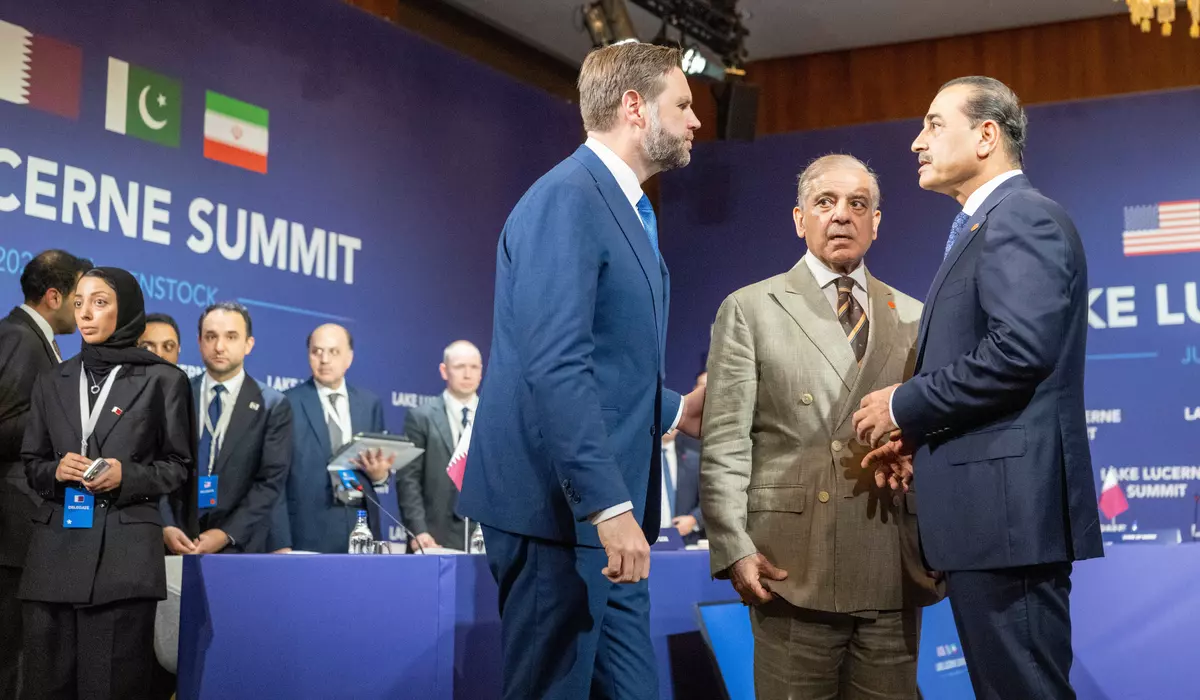
But the talks in Switzerland, which are being brokered by representatives from Pakistan and Qatar, kicked off on shaky ground.
A day earlier, Iran’s military announced it closed the Strait of Hormuz because of continued Israeli strikes in Lebanon against Hezbollah, an Iran-backed Islamist militant group.
Iran said the U.S. failure to rein in Israel violated the terms of the tentative ceasefire, which stipulates that all fighting in Lebanon must end.
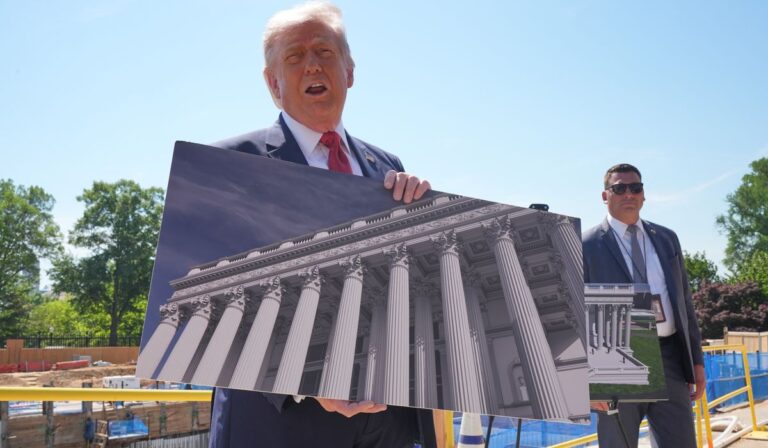
But Mr. Trump threatened to restart attacks in Iran if the strait, a critical waterway through which 20% of the world’s oil travels, closes or if Tehran continues to support Hezbollah.
Despite announcing a ceasefire on Friday, Israeli forces and Hezbollah exchanged heavy fire throughout Saturday, further putting pressure on the negotiations.
“Iran must immediately stop their highly paid proxies in Lebanon from causing trouble,” Mr. Trump said on Truth Social. “If they don’t, we’ll hit Iran very hard again, just like we did last week, only harder.”
It was one of several threats Mr. Trump levied against Iran while peace talks were underway. In a phone interview with Fox News, he threatened fresh attacks on Iran if Tehran interferes with the waterway.
“You close [the Strait of Hormuz] and you won’t have a country,” Mr. Trump said he told Iranian officials,” he said. “You won’t even make it back to your f–ng country.”
A member of Iran’s negotiation team warned that American officials need to “be careful with their statements,’ saying that Iran’s armed forces are “ready to respond” if Mr. Trump continues his saber-rattling.
Iranian Parliament Speaker Mohammad Bagher Ghalibaf wrote on X, “Don’t they think to themselves that if their threats had any effect, they wouldn’t have reached the point of despair today? We don’t count on the threats of Americans.”
Mr. Vance sought to strike a starkly different tone in Switzerland as he sat across from Iranian negotiators at Lake Lucerne.
The talks kick off a process that is aimed at establishing a broader peace deal.
“The question before us now is how much more can we accomplish together? Can we turn over a new leaf?” he said.
“Can we change relations in the Middle East permanently, or do we go back to doing things the old way, which is not our preference, but certainly very much something that can happen,” he said.
Both sides have a 60-day window to finalize a lasting agreement.
Ahead of the trip, Mr. Vance detailed his top priorities as establishing the structure of the talks, making progress on the nuclear issues and ensuring a ceasefire in Lebanon, where Israel continues to exchange fire with Hezbollah.
Iran’s nuclear program remains the most controversial part of negotiations. On Sunday morning, Iranian president Masoud Pezeshkian said, “what is certain is that we will never back down from the right to enrich uranium, and the other side is also forced to accept it.”
Iran has insisted its nuclear program is peaceful. It has enriched uranium far past the threshold needed for civilian use and to the point of being only weeks of work away from atomic-bomb quality.
Read more Khanna says voters need to extend ‘grace’ to Platner amid controversies
Even in the U.S., members of Mr. Trump’s own party appeared skeptical that anything meaningful would be accomplished through talks.
Sen. Lindsey Graham, South Carolina Republican and staunch Trump ally, predicted the talks will “fail.”
“Let’s try a diplomatic solution,” Mr. Graham said on CBS News’ “Face the Nation.” “I think it’s going to fail. What happens next?”
Mr. Graham said he spent 4½ hours with the president on Friday and described what he thinks will happen if talks ultimately fail.
“If this deal fails, President Trump is going to take the Strait of Hormuz over by force,” he said. “The United States will control the Strait of Hormuz, we’ll charge a fee for all those who go through to pay for the operation and we’re going to expand the Abraham Accords in calendar year 2026.”
“If Iran contests control of the Strait of Hormuz by the United States, we will obliterate them,” he said.
U.S. Ambassador to the United Nations Mike Waltz said negotiations must continue to stop Iran from developing nuclear weapons.
But he emphasized that any agreement would not be reliant on trusting Iran, but rather “all about verification” and would carry threats of military force.
The U.S. negotiating team includes Mr. Vance, White House envoy Steve Witkoff and Mr. Trump’s son-in-law Jared Kushner. The Iranian delegation is led by Mr. Ghalibaf and Foreign Minister Abbas Aragchi.
Both Washington and Tehran signed a memorandum of understanding, which requires actions on both sides. The U.S. must lift sanctions on Iran, which would free up billions in frozen assets and end a naval blockade of Iran’s ports.
Iran must let ships pass freely through the Strait of Hormuz after its closure sent oil and gas prices soaring. Tehran must end military operations in Lebanon.
Neither Israel nor Hezbollah has signed the Memorandum of Understanding, which is exclusively between Iran and the U.S., and Israel has criticized the deal.
Talks will continue Tuesday in Washington between Israel and the Lebanese government, though Hezbollah, an irregular militia that de facto rules parts of the country, is not a part of them either.
Nevertheless, Hezbollah leader Naim Kassem said Sunday in a televised speech that his group will not recognize or follow any deal that grants Israel “security zones” in southern Lebanon or does not result in a complete withdrawal of Israeli forces from the country.
“There are no ‘security zones,’ for Israel,” he said.
Israeli Prime Minister Benjamin Netanyahu said Sunday in Jerusalem that he thinks the U.S.-Israeli military campaign will lead to the fall of Iran’s Islamist government, which he said was one of his original goals.
“That is what will be the real triumph, when the Iranian people take their own destiny in their hands, and they knock out this brutal regime that is terrorizing them and terrorizing the rest of the world.”
Read more DOJ to investigate MLB after players warned for putting Bible verses on Pride Night hats
About the Author