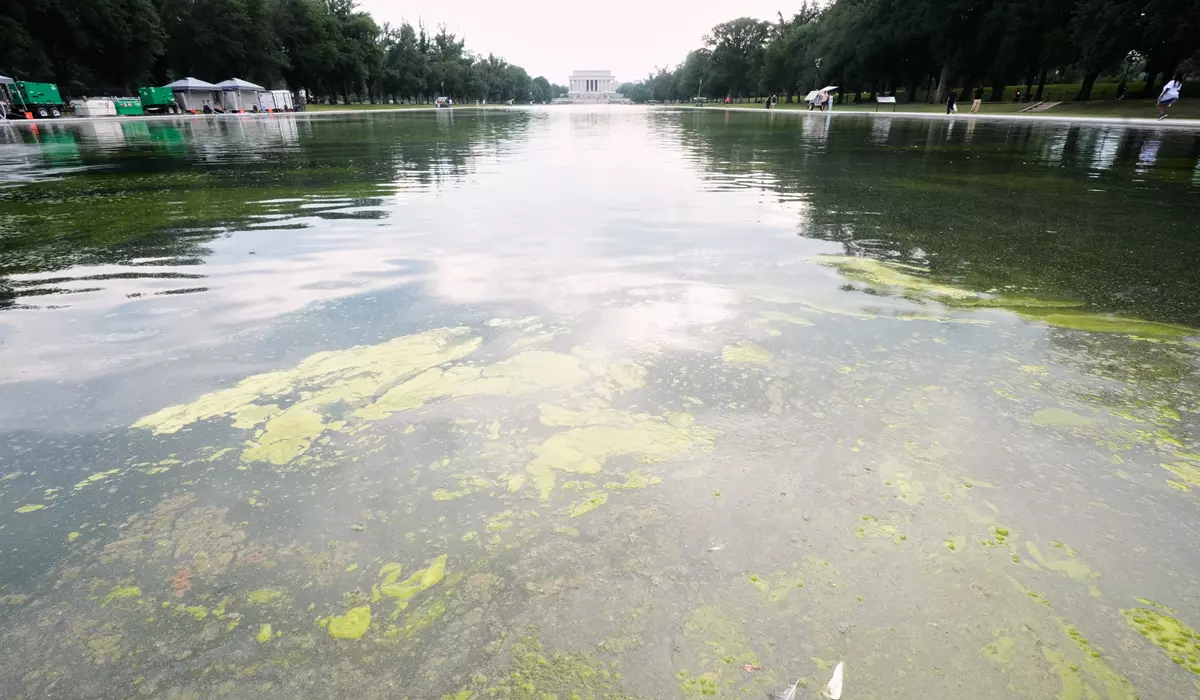
Algae is again plaguing the Lincoln Memorial Reflecting Pool, and the White House’s newest plan to fix the $14.2 million makeover is hydrogen peroxide.
Read more Democrats weigh options for rigging the Supreme Court
National Park Service workers were seen pouring bottles of 12% hydrogen peroxide concentrate into the pool as part of an effort to mitigate the algae bloom that appeared just days after the eight-week renovation project was completed.
Hydrogen peroxide is a powerful nonchlorine shock used to control algae as it bubbles on contact due to oxidation. Afterward, it degrades into just water and oxygen, leaving no harsh chemical residues.
Officials from the Interior Department and the National Park Service said the sudden growth was expected, attributing the green tint to “residual” algae from flushing supply lines that sat dormant during construction.
The pool is incredibly shallow, meaning warmth and sunlight create a prime breeding ground for persistent algae.
To combat the algae, maintenance workers reportedly deployed nanobubbler technology to oxygenate the water and began physically removing the algae.
The Interior Department said that “the algae is dead and being vacuumed up as we speak.”
Read more Foiled terror plot at White House’s UFC event intended to ‘jump-start’ revolution, prosecutors say
“The nanobubbler technology has successfully destroyed the algae bloom that has plagued every pool reopening since 1922, most infamously, the Obama pool reopening that resulted in massive algae clumps taking over the pool’s surface following years of construction that cost taxpayers millions upon millions, only to be broken and disgusting days later,” an Interior Department spokesperson said in a statement.
Buckets of Induclor, a concentrated chlorine compound primarily used for water disinfection and algae control in water systems, were also spotted by the pool.
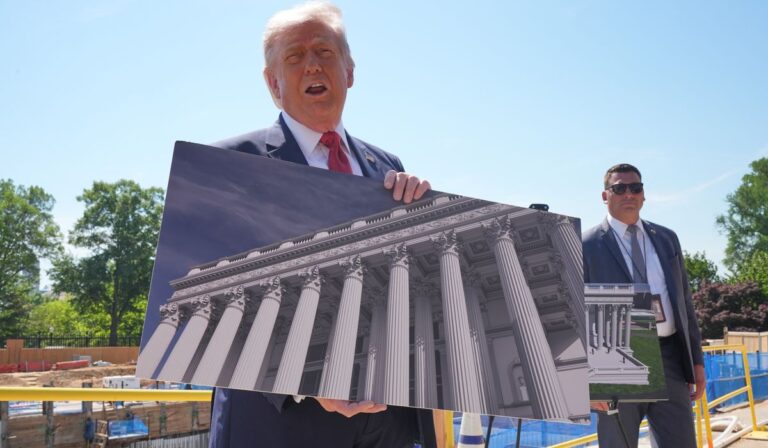
When President Trump decided to paint the Lincoln Memorial Reflecting Pool “American flag blue,” he said that the renovation aims to revamp the gray look of the pool’s concrete bottom to “beautify” the District ahead of the nation’s 250th anniversary.
Aside from a paint job, which included resurfacing the basin with an industrial-grade coating, the project included fixing leaks and reinforcing structural joints.
The landmark’s persistent headaches trace back to a few core engineering flaws.
Because it rests on a series of massive concrete slabs, the expansion joints frequently fail. This allows millions of gallons of water to leak into the ground, forcing a constant intake of replacement water.
Previous administrations have attempted to address the pool’s issues through major structural renovations and frequent maintenance, but the renovations did not stand the test of time — a hurdle that the Trump administration has yet to face.
Read more Feds charge 15 ‘antifa’ activists with ginning up anti-ICE violence in Minneapolis
About the Author