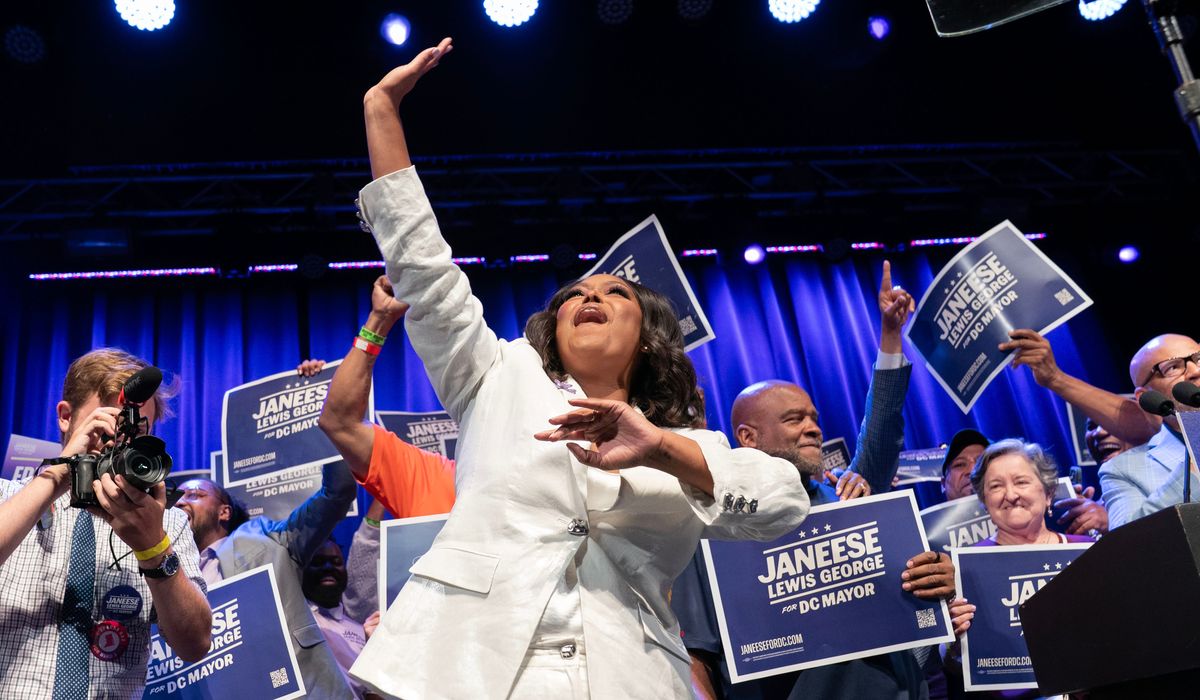
D.C. Council member Janeese Lewis George appears to have a clear path to winning the mayor’s race after her top primary opponent conceded Thursday, letting the democratic socialist continue a trend in both major parties where anti-establishment candidates are sweeping into office.
Read more Court agrees Trump team can rewrite slavery exhibits at Independence Park in Philadelphia
Former Councilman Kenyan McDuffie, the race’s more moderate choice, accepted that he could not overcome the double-digit lead Ms. Lewis George accrued after three-quarters of the votes were counted. She has won 53% of the ballots versus 37% from Mr. McDuffie.
Ms. Lewis George, a Ward 4 Democrat and self-described socialist, is all but guaranteed to replace three-term incumbent Mayor Muriel Bowser following November’s general election, which is considered more a matter of procedure in the heavily Democratic city.
Ms. Bowser chose not to seek reelection and never gave an official endorsement in the open primary, but she made it clear that she “always supported” Mr. McDuffie as her pick for mayor.
D.C. voters bucked her opinion at the ballot box and went with Ms. Lewis George.
“Let it now be laid to rest. It is the people of D.C. who elect the mayor,” Ms. Lewis George said late Tuesday at her election night rally at Howard Theatre. “Tonight, D.C. made its demand. What seemed like a distant dream not too long ago is already history unfolding before our eyes. This moment is for those who refuse to surrender their hope in a government that works for all of us.”
Ms. Lewis George joins other prominent democratic socialists who have gone against the grain of the Democratic Party to win their elections.
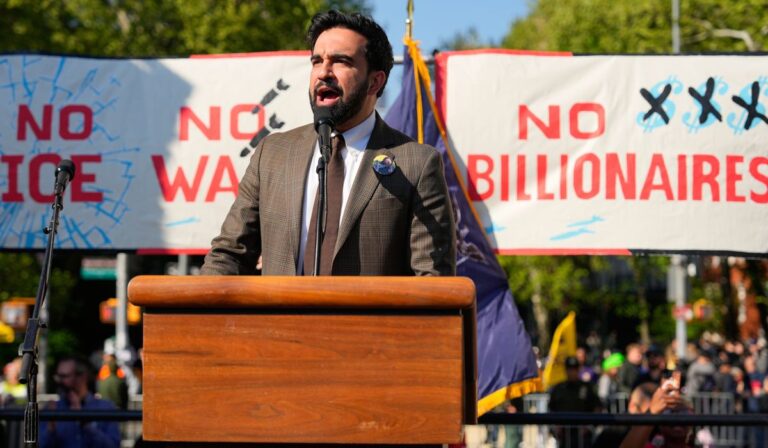
The most famous example was last fall’s mayoral race in New York City, where voters overwhelmingly backed Zohran Mamdani over former Gov. Andrew Cuomo.
Mr. Mamdani, who was an obscure state assemblyman when he launched his campaign, seemingly came out of nowhere to end the Cuomo family political dynasty in New York.
Mr. Cuomo’s father, Mario Cuomo, was a popular three-term governor in the Empire State in the 1980s and ’90s.
But the younger Cuomo became radioactive in 2021 when a sexual harassment scandal cut short his own third stint as governor.
Mr. Mamdani may have been an outsider due to his ties to the Democratic Socialists of America, but the prospect of putting Mr. Cuomo back in office helped the young candidate land several big-name endorsements, such as from Gov. Kathy Hochul and House Minority Leader Hakeem Jeffries.
Even more of a dark horse candidate during her winning race last November was Seattle Mayor Katie Wilson.
Ms. Wilson, also a democratic socialist, edged out incumbent Bruce Harrell by roughly 3,000 votes, even with significant fundraising disadvantages and a lack of support from Washington state’s most powerful politicians.
Read more Vance praises Iran deal, says Tehran gets no rewards without action
What Ms. Wilson and Mr. Mamdani did share was a strong ground game that energized the left-wing base in their cities.
For Mr. Mamdani, it was bold promises of freezing the rent and eliminating bus fares, calls of which were dressed up in snazzy video adverts.
For Ms. Wilson, it was nearly 15 years of grassroots activism in Seattle that gave her a network of unions and nonprofits to boost her campaign.
“Wealthy interests poured nearly $2 million into a political action committee to prevent my election, because for some people in our city the status quo is working exactly as intended,” Ms. Wilson said during her acceptance speech in November. “They might have the money, but we had the people, and the results of this election proved that the working people of our city are tired.”
As for Republicans, they haven’t been exempt from intraparty upheaval during their primaries.
President Trump, whose Make America Great Again movement dominates the GOP’s political agenda, took rare lumps recently.
Georgia’s gubernatorial primary runoff saw Rick Jackson beat Trump-backed Lt. Gov. Burt Jones on election night.
Mr. Jackson, a billionaire healthcare tycoon, personally funded more than half of the $100 million that fueled his winning campaign. The money was well spent, as it helped him leapfrog Mr. Jones in the runoff after Mr. Jackson had placed second during the May 19 primary.
The president’s endorsement in Iowa’s Republican gubernatorial primary earlier this month also wasn’t enough to get Rep. Randy Feenstra across the finish line.
Mr. Feenstra lost by less than 2,000 votes to businessman and farmer Zach Lahn in the June 2 election, despite the congressman’s long record of political work in Iowa and the nation’s capital.
“Nobody thought this could be done. We were outspent, opposed by the establishment, told to wait our turn,” Mr. Lahn said during his victory speech that night. “Tonight, the people of Iowa had something to say about that — that we’re not going to wait anymore.”
Read more Poll shows most Americans value safety over access on abortion pill
About the Author