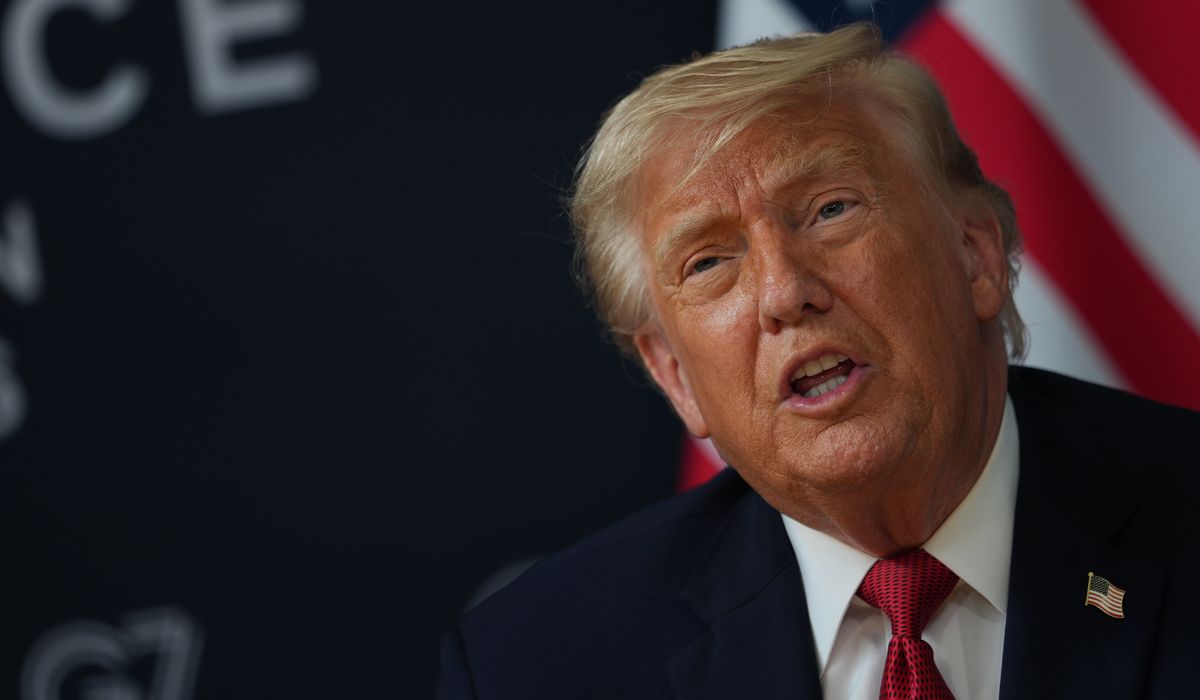
Congressional lawmakers in both parties are criticizing the Trump administration for striking a lopsided peace deal with Iran that falls short of its objectives for going to war.
Read more Data leak unmasks members of Peter Thiel’s elite, secretive ‘Dialog’ society
Senate Armed Services Chairman Roger Wicker said the deal “negotiates away the victories of Operation Epic Fury,” as he and other Republicans raised concerns that Iran will use economic relief provided under the agreement to continue funding its terrorist proxies.
Democrats were even more blunt in their criticisms of the deal.
“Iran took Trump to the cleaners,” said Senate Minority Leader Charles E. Schumer of New York.
Vice President J.D. Vance on Thursday insisted the peace deal is a “win-win” for the U.S. because if they don’t change their behavior, “their military and their nuclear program is still destroyed.”
The first phase of the deal, a memorandum of understanding that President Trump and Iranian President Masoud Pezeshkian signed Wednesday, leaves much to be negotiated over a 60-day timeline to reach a final deal.
Iran has committed not to develop or procure a nuclear weapon and to downblend its current stockpile of enriched uranium, but the first-phase agreement includes no enforcement mechanisms to ensure Iran will not restart its nuclear program.
The U.S. has given up what many lawmakers view as its primary source of leverage by agreeing to end its naval blockade of the Strait of Hormuz within 30 days and to immediately issue waivers for Iranian oil exports until sanctions blocking them are terminated.
“Starting next week, Iran will be able to sell oil without sanctions, and the strait is permanently under their control,” said Sen. Chris Murphy, Connecticut Democrat. “It’s a national embarrassment, but I guess it’s the price we have to pay to end this incompetent war that was getting more disastrous every day.”
Sen. Mike Rounds, South Dakota Republican and Armed Services panel member, said he is concerned the MOU forces the U.S. to immediately release some of Iran’s frozen assets.
“If that’s the case, what stops them from using that to fund Hezbollah and other terrorist activities as they have done in the past, and as they apparently still are committed to do?” he said.
Mr. Schumer also complained that the agreement does not force Iran to cut off support for its terrorist proxies while it gets to “rake in billions of dollars in oil sales, hundreds of billions of dollars in reconstruction aid, and God knows how much more in potential fees Trump may let it impose on ships in the Strait of Hormuz.”
Read more D.C.’s democratic socialist mayor-to-be joins outsider candidates winning major elections
Several lawmakers fumed over a provision in the MOU stating that the U.S. and its regional partners will provide at least $300 billion for Iran’s post-war reconstruction and economic development.
Mr. Trump and administration officials promise the money will not come from U.S. taxpayers, but most lawmakers do not believe Iran should get any payout.
“It’s not going to be used for constructive, useful purposes,” Texas GOP Sen. John Cornyn said.
Mr. Wicker said the $300 billion fund “would make Iran’s payoff under President Obama’s 2015 deal look like a pittance by comparison.”
“I also oppose the U.S. lifting any sanctions on Iran, or unfreezing Iranian funds, in exchange for Iran’s mere agreement to negotiate for another 60 days,” he said in a statement. “The Iranian regime has not renounced its ultimate goal — ’Death to America, Death to Israel.’ The regime will invest every penny it receives to further that aim.”
Senate Majority Leader John Thune, South Dakota Republican, said he needs to learn more about the source of the $300 billion in funding and the contingencies surrounding that and other economic relief.
“I don’t think there ought to be any financial incentives or any financial relief given to Iran absent their commitment to end their nuclear program,” he said.
Still, Mr. Thune and most other Republicans are willing to give the administration the benefit of the doubt for now as negotiations continue.
“Without the MOU being signed, there’s no diplomatic path to solving the Iranian nuclear problem, and I’d rather do it through diplomacy,” said Sen. Lindsey Graham, South Carolina Republican. “Are there problems with the MOU? Yeah. But the upside of trying is greater than the downside.”
Mr. Murphy said he does not believe a final agreement will come together and that the U.S. agreeing to give Iran control of the Strait of Hormuz “will have consequences for decades.”
Read more Court agrees Trump team can rewrite slavery exhibits at Independence Park in Philadelphia
About the Author