NEWS AND ANALYSIS:
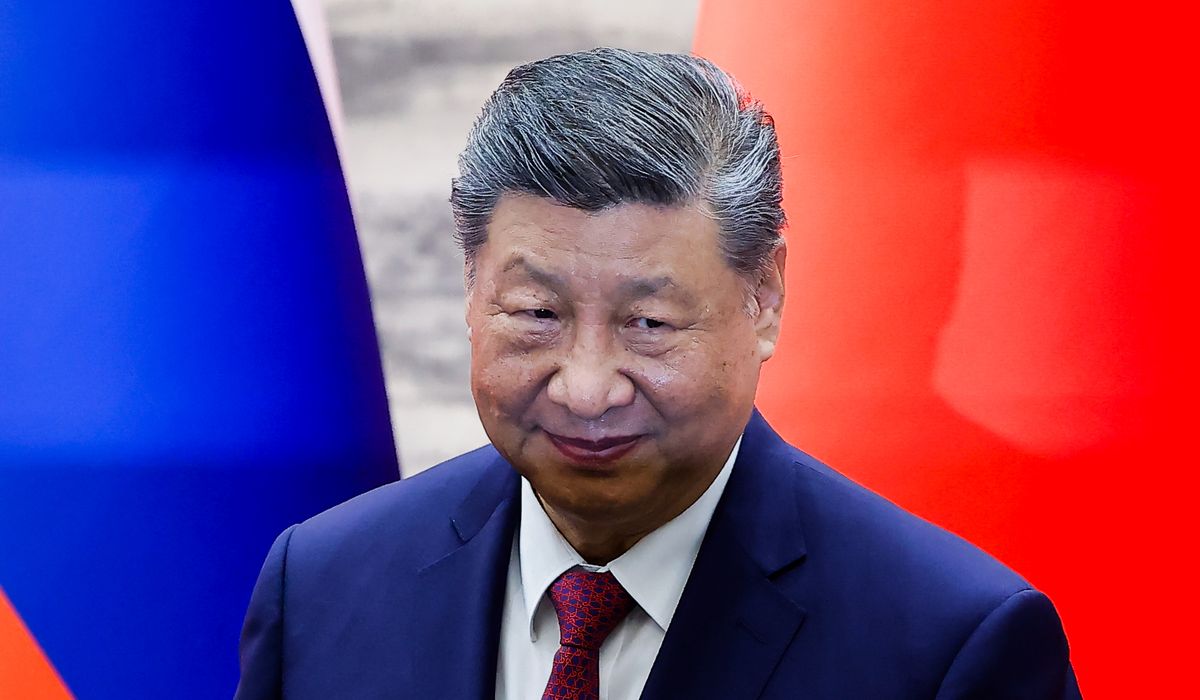
American intelligence agencies are working on a report to Congress that will disclose new details about the wealth of Chinese Communist Party leaders, including Party General Secretary Xi Jinping, who is also president, according to the Office of the Director of National Intelligence.
Read more At least 164 dead and 971 injured after powerful quakes rock Venezuela, acting president says
The public report is due before the end of the year and is required under the fiscal 2026 Intelligence Authorization Act signed into law in December as part of the Defense Authorization Act.
“I can confirm ODNI is actively working on the report, as required by the FY26 IAA,” an ODNI spokeswoman told Inside the Ring.
The forthcoming report will be the second effort by U.S. intelligence agencies aimed at highlighting what investigators say is billions of dollars in hidden wealth held by senior communist leaders.
The financial holdings are mainly obtained indirectly through cutouts and held by family members to obscure the extreme wealth of party leaders, who, under Mr. Xi, are being urged to become anti-capitalist crusaders.
The intelligence law requires Tulsi Gabbard, until last week the director of national intelligence, Secretary of State Marco Rubio and Defense Secretary Pete Hegseth to collaborate in producing the report and to post it online before December.
The report specifically must identify the personal wealth, financial holdings, and business interests of Mr. Xi, the paramount party leader, along with the six other members of the CCP Politburo Standing Committee, the collective dictatorship that rules China.
In addition to the seven Standing Committee members’ wealth, intelligence agencies also will provide details on the hidden wealth of the full CCP Politburo, the most senior 25 communist leaders.
The report also must provide evidence of physical and financial assets owned or controlled directly or indirectly by the leaders. Coverage will include extensive real estate holdings both inside China and around the world, including in nearby Hong Kong and Macao.
All “high-value personal assets” and business holdings will be included in the report, such as investments and financial accounts held outside mainland China, according to the language of the law.
A key provision of the section of the law calls for intelligence analysts to disclose all financial proxies, business associates, or other entities that are “used to obscure the ownership of such wealth and assets,” using a “baseline” of information first mentioned in an earlier ODNI report to Congress.
That report, made public in March 2025, was called “‘Wealth and Corrupt Activities of the Leadership of the Chinese Communist Party.”
The new report on Chinese leaders’ wealth demands greater specificity than the earlier assessment that drew criticism from Congress for relying mainly on press reports and for lacking detail.
Based on that effort, the new authorization law now wants the release of what it calls “nonpublic information related to the wealth of the leadership of the Chinese Communist Party, to the extent possible consistent with the protection of intelligence sources and methods.”
The report must be in unclassified form and will be posted on the ODNI website. A more detailed study can include a “classified annex,” the law states.
A spokesman for the Chinese Embassy did not immediately respond to a request for comment.
Those who sponsored legislation for the first report were Rep. Andy Ogles, Tennessee Republican and then-Florida Sen. Marco Rubio, now secretary of state.
The March 2025 report stated that Mr. Xi had amassed more than $1 billion in assets through his relatives and noted that up to 65% of all officials in China receive unofficial income through bribery or graft.
Critics said the first report sought to play down the massive hidden wealth of the top communists by focusing more on corruption instead of hidden money and holdings.
China expert Paul Berkowitz, a former congressional aide who spent 31 years handling Asia issues on Capitol Hill, said Mr. Rubio and Mr. Ogles initially pressed for the report in a bid to expose the hidden wealth of CCP leaders.
“They understood that this wealth is the Party’s Achilles’ heel and they wanted to target that unique vulnerability,” Mr. Berkowitz said. “Communists derive their legitimacy by portraying themselves as humble servants of the people. They know it would be devastating for the Party if Chinese citizens knew how filthy rich their leaders were.”
Mr. Berkowitz said Congress passed the legislation on the hidden wealth added because the earlier report was “an insulting, absurdly meaningless four-page report.”
The intelligence community spent two-and-a-half years on what was supposed to be a thorough account of Chinese leaders’ wealth but failed to do so, Mr. Berkowitz said.
A Congressional Research Service Report first disclosed by The Washington Times in June 2024 said Mr. Xi had amassed at least $376 million in investments, including an indirect 18% stake in a rare earth mineral company worth more than $311 million, and $20.2 million holdings in a technology company.
The CRS report stated Mr. Xi’s estimated hidden wealth is $707.2 million spread among relatives, including his wife, Peng Liyuan, and daughter, Xi Mingze. Most of the assets are owned by Mr. Xi’s eldest sister, Qi Qiaoqiao, her husband, Deng Jiagui, and their daughter, Zhang Yannan, the report said.
Congressional aides suspect the leader’s wealth is far greater, based on a 2012 New York Times report that disclosed an estimated $2.7 billion held by relatives of then-Premier Wen Jiabao, the CCP’s third most senior leader.
The forthcoming report is expected to upset President Trump’s efforts to build closer ties to Mr. Xi and more stable trade relations.
Mr. Trump praised the Chinese leader in a podcast Saturday as “very smart, “all business,” and one of the two greatest leaders he admires most on the world stage. The other was Indian Prime Minister Narendra Modi.
Read more Prosecutions are up and crime is down: U.S. Attorney Jeanine Pirro on public safety in D.C.
“President Xi is great,” Mr. Trump told the podcast “The Axios Show.” “Xi’s got a great look…he’s tall, he’s 6 foot 2. He’s got a great stature; he’s got great confidence, and he’s smart.”
Senators urge Energy to block Chinese access to U.S. labs
Two senators urged Energy Secretary Chris Wright to crack down on Chinese nationals’ gaining access to sensitive information at Energy national laboratories.
“We write expressing serious concern regarding the Department of Energy’s continued practice of permitting foreign nationals from China to access facilities across the National Laboratory complex and work alongside American scientists,” Sens. Tom Cotton and Mike Lee stated.
“Recent DOE data underscores that this practice puts the nation’s research enterprise at risk of foreign intelligence collection and technology transfers that will benefit our adversaries.”
Mr. Cotton, Arkansas Republican, is chairman of the Senate Select Committee on Intelligence, and Mr. Lee, Utah Republican, heads the Energy and Natural Resources Committee.
According to Energy data, about 3,200 Chinese nationals visited, or worked, both long-term and short-term, at the national laboratories as of September 2025, and about 2,100 were formally employed by the labs.
Chinese nationals also access national laboratories either physically or electronically more than 5,000 times in 2025.
“These facts reflect severe vulnerabilities at our nation’s premier and most sensitive scientific environments,” the senators stated.
“China is our main competitor in research and development and the race for emerging tech, where it seeks to surpass the United States by stealing American intellectual property and technologies.”
Despite the threat that has been known for decade, the Energy Department has failed to restrict the Chinese from access to the laboratories.
The senators asked Mr. Wright to answer specific security-related questions about the Chinese access, including how China’s recent national intelligence law obligates all Chinese nationals, including those at the national labs, to cooperate with Chinese spy services.
Also, Mr. Cotton and Mr. Lee asked whether the Chinese are granted access to controlled technologies, export-controlled technologies, or any other sensitive research and if so, how many were given access.
The department has the stated mission of advancing U.S. scientific leadership, protecting national security and safeguarding key technologies.
“This mission can’t be achieved when it’s undermined by thousands of Chinese nationals infiltrating the National Labs each year,” Mr. Cotton and Mr. Lee said.
The senators’ security concerns regarding Chinese infiltration of the national laboratories are not new.
In 2022, a private security and intelligence firm revealed in a report that Beijing targeted scientists at the Los Alamos nuclear laboratory for recruitment, and that more than 160 researchers returned to China over more than three decades and were helping China’s nuclear and other advanced weapons programs.
The report by Strider Technologies stated that between 1987 and 2021, an estimated 162 scientists from the New Mexico laboratory took part in a variety of Chinese research and development programs after leaving the U.S.
“Former Los Alamos scientists have made, and continue to make, considerable contributions to the PRC hypersonic, missile and submarine programs that present an array of security risks for the United States and the entire free world,” stated the 32-page report by Strider Technologies.
Tensions rise at disputed South China Sea shoal
Chinese-Philippines tensions were raised over China’s recent placement of some type of floating platform near the Scarborough shoal, a resource-rich islet claimed by both Beijing and Manila.
China took control of the shoal in 2012 as part of a larger effort to take over the entire South China Sea as its maritime territory.
The Philippines took the dispute to an international tribunal that in 2016 ruled against China’s claims to the shoal and the rest of the South China Sea as illegal under international law.
Chinese vessels since have fired water cannon at Philippine fishing vessels near the shoal.
Philippine officials released photos of the new platform that is about 300 square feet and outfitted with a communications antenna.
The platform was raising fears that China is getting ready to press greater claims to the shoal. However, the platform was removed after several days, according to news reports from the region.
The Chinese military has built bases with missiles and electronic warfare gear on several islands in the sea — despite a 2015 promise by Chinese President Xi Jinping to then-President Obama that it would increase tensions with such militarization.
“If it’s a precursor to a more permanent presence, or a precursor to other malign activity, then it’s worrisome,” Philippine Defense Secretary Gilberto Teodoro Jr. told The Wall Street Journal.
China claimed the platform is a temporary scientific research facility to study coral reefs.
Read more Senate redo of Iran war powers vote pleases Trump
• Contact Bill Gertz on X @BillGertz.
About the Author