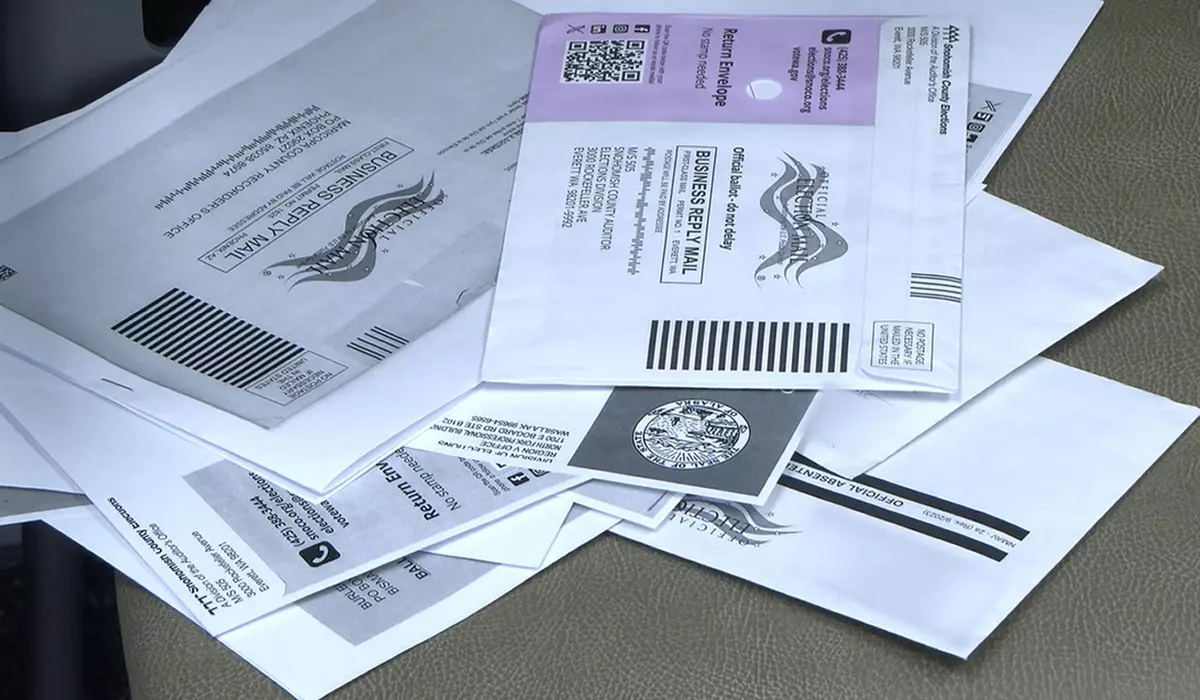
A federal judge on Thursday issued an injunction blocking the administration from carrying out President Trump’s executive order directing the U.S. Postal Service to refuse delivery of mail-in ballots of states that won’t verify their voters’ identities.
Read more World Cup showcases America’s unique, enviable freedoms
U.S. District Judge Indira Talwani, an Obama appointee and frequent stumbling block for Mr. Trump, said the president’s order was an unconstitutional wish list that he had no power to carry out.
Judge Talwani forbade the postal service from refusing to deliver ballots, and rejected the post office’s attempt to create a uniform national mail-in ballot.
And she said states cannot be forced to submit their voter lists to the government for citizenship identity checks — though she said they may choose to do that on their own.
“Accordingly, to the extent the EO attempts to intimidate local election officials to use the necessarily incomplete Confirmed Citizenship Lists as a resource, lest they face criminal prosecution, such efforts fall outside the Presidents’ Article II and otherwise-delegated authority,” Judge Talwani ruled.
The injunction is the latest in a chain of legal defeats for Mr. Trump as he seeks to impose his will on voting, and asserts his belief that cheating is rampant.
Another federal judge earlier this week ruled that the government cannot use the Department of Homeland Security’s SAVE system to run citizenship checks on voter lists.
Read more Iranian official trashes talk of buying U.S. farm products, underscoring tensions with Washington
And the Department of Justice’s attempt to force states to turn over their voting lists has been rejected by nine district courts and one circuit court. No court has yet to embrace the president’s position on that matter.
Mr. Trump’s executive order on mailed-in ballots, issued March 31, had called on the postal service and Homeland Security to police who is allowed to cast a vote through the mail.
States who allowed voting by mail were directed to submit lists of voters to Homeland Security, which would then supply a “confirmed citizen” list back to states. Anyone who doesn’t appear on that list is to be blocked from submitting a ballot through the mail.
Mr. Trump also ordered states to preserve election records for five years to allow the feds a chance to investigate any irregularities in mail voting.
Judge Talwani said all of that tramples on states, who under the Constitution are charged with administering elections, and Congress, which has primary power to control the postal service.
Read more Supreme Court rejects ‘racist’ claims against Trump, allows him to shut down deportation amnesty
About the Author