U.S. forces struck targets in Iran again late Saturday while Tehran launched a fresh wave of attacks on Bahrain and Kuwait, both home to key American military bases, just hours later.
Read more Navy searching for Marine who went missing from USS Anchorage off coast of California
President Trump warned in a social media post that “the Islamic Republic of Iran will no longer exist” unless Tehran changes course.
The latest rounds of strikes represent yet another blow to the fragile “ceasefire” that the U.S. and Iran agreed to earlier this month.
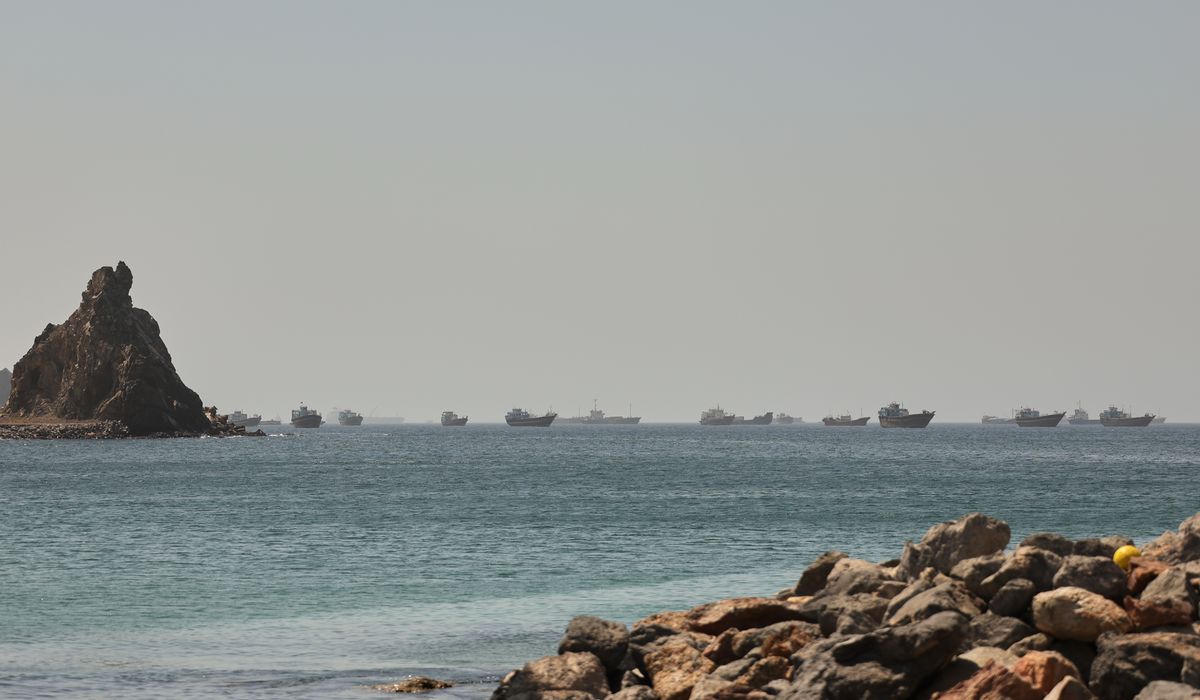
In a statement, U.S. Central Command said that Iranian forces targeted the Panama-flagged oil tanker M/T Kiku on Saturday morning as it sailed through the Strait of Hormuz, the strategically vital waterway that has become the central flashpoint in the U.S.-Iran conflict.
That incident followed last week’s targeting by Iran of the commercial ship the M/V Ever Lovely, CENTCOM said.
U.S. forces targeted Iranian military sites late Friday in response to that first incident, and did so again late Saturday after the M/T Kiku was struck by a one-way attack drone.
“CENTCOM forces launched strikes today in direct response to continued Iranian aggression against commercial shipping. U.S. military aircraft targeted Iranian military surveillance infrastructure, communication systems, air defense sites, drone storage facilities, and minelayer capabilities,” CENTCOM said in a statement.
“Commercial vessel transits through the Strait of Hormuz continue. U.S. forces remain vigilant, lethal, and ready,” the statement said.
In a post on Truth Social, Mr. Trump warned Iran against further targeting of commercial ships.
“It is very possible that they will never learn! There may come a point when we are no longer able to be reasonable, and will be forced to militarily complete the job that we very successfully started,” the president posted. “If that happens, the Islamic Republic of Iran will no longer exist!”
Early Sunday, the Kuwaiti military said air defenses intercepted incoming Iranian drones and missiles just after the latest U.S. strikes.
Read more Apple stock tumbles 5% as MacBook, iPad price hikes wipe $275 billion from market cap
Kuwait, which hosts a major U.S. Army base, said it had detected and intercepted two ballistic missiles and there were no reports of injuries or damage.
Bahrain’s Interior Ministry said the Iranian strikes damaged a residential building near the international airport and no one was killed. The ministry released photos of an 8-story building, with the top floor destroyed, filled with rubble and its windows blown out.
Bahrain is home to the U.S. Navy’s Fifth Fleet, whose base there came under repeated attack during the U.S.-Iran war. The damaged building on Sunday was not near the fleet’s headquarters, in downtown Manama.
Bahrain’s Foreign Ministry denounced what it called “a dangerous escalation that reveals that what Tehran is doing is not a passing act, nor an isolated incident, but rather a deliberate approach and a systematic pattern of repeated aggression.”
Iran’s paramilitary Revolutionary Guard claimed responsibility for both attacks.
The Trump administration entered into a memorandum of understanding with Iran earlier this month.
That memo called for an end to the fighting and the reopening of the Strait of Hormuz during 60 days of final-stage negotiations over Iran’s nuclear program and other matters.
Vice President J.D. Vance and Iranian negotiators recently finished the first round of talks in Switzerland, with the Trump administration saying Iran agreed to accept United Nations inspectors at sensitive nuclear sites and to buy American farm products with its unfrozen assets.
Iranian officials disputed the specifics of that account.
On Sunday, Iranian Foreign Minister Abbas Araghchi said that his nation alone will control the Strait of Hormuz.
“Any interference in this matter, any attempt to establish new or separate arrangements from those currently being carried out by the Islamic Republic of Iran, will only lead to further complications, delay the reopening of the Strait of Hormuz, and increase the level of tension, just as over the past two nights we witnessed incidents in the Strait of Hormuz that led to an increase in tension and confrontation,” Mr. Araghchi said Sunday during a trip to Baghdad.
• Tom Howell Jr. contributed to this article, which is based in part on wire-service reports.
Read more ‘The View’ co-host Joy Behar says Americans ‘should all be’ embarrassed by U.S.
About the Author