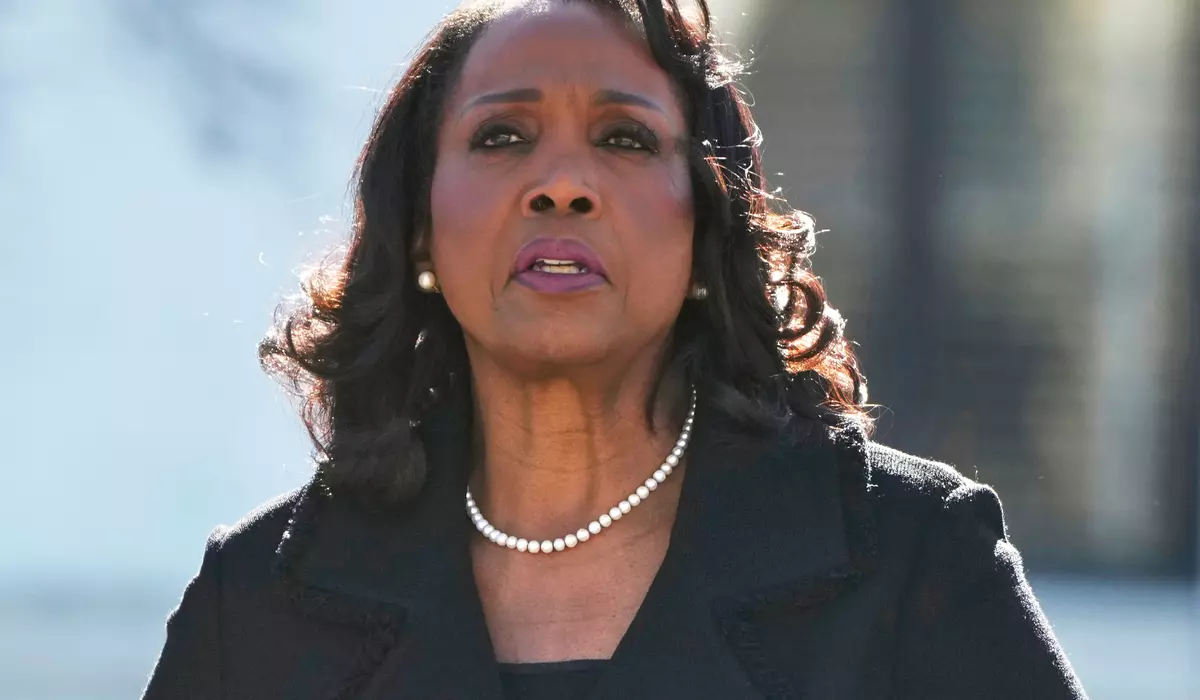
The Supreme Court on Monday granted presidents wide-ranging authority to fire senior officials over policy differences, but said some limits must be observed.
Read more Supreme Court rules states can count late-arriving mailed ballots, rejecting Trump-led challenge
In a pair of decisions, the justices approved President Trump’s firing of a Federal Trade Commission member whom the White House booted over political differences. But the high court continued to block Mr. Trump’s firing of Rebecca Cook from the Federal Reserve Board, saying he didn’t give her a chance to challenge his justification that she engaged in iffy mortgage behavior.
Together, they give a president vast powers to get rid of employees he sees as roadblocks to his agenda, even at so-called independent agencies that Congress had tried to insulate from such presidential meddling.
Chief Justice John G. Roberts Jr. wrote both opinions, joined by Justice Brett M. Kavanaugh. The court’s other GOP appointees sided with them in the FTC case, while the Democratic appointees joined with them in the Federal Reserve case.
“The president must have the assistance of officers he can trust,” the chief justice wrote in the FTC case. “Although it is up to the Senate to decide whether to confirm those with whom the president would prefer to work, neither Congress nor the courts may saddle him with those with whom he cannot work.”
In approving the firing of Rebecca Slaughter, a Democratic appointee to the FTC, the justices overruled a 91-year-old precedent where the Supreme Court had blocked President Franklin Roosevelt from firing an FTC member.
Read more Israel recognizes death of 1.5 million Armenian Christians in Ottoman Empire during WWI as genocide
Mr. Trump’s firing of Ms. Cook at the Federal Reserve didn’t fare as well.
The president had said she was being fired not over political differences but rather for cause. He accused her of malfeasance in a past mortgage application.
Lower courts blocked the firing, allowing Ms. Cook to remain on the job while the case continued.
And the justices said Monday that was the right call.
Chief Justice Roberts said Mr. Trump needed to give Ms. Cook an “opportunity to respond to the charges made against her.”
“To be clear, the ultimate question of whether the president can remove Cook for cause will depend in part on the underlying facts. In this opinion, we have not addressed the facts,” he wrote. “Rather, we have simply addressed the parties’ arguments about the appropriate legal standards under which the facts must be evaluated.”
Read more Manufacturers cheer EPA moves to revise permitting rules under the Clean Air Act
About the Author