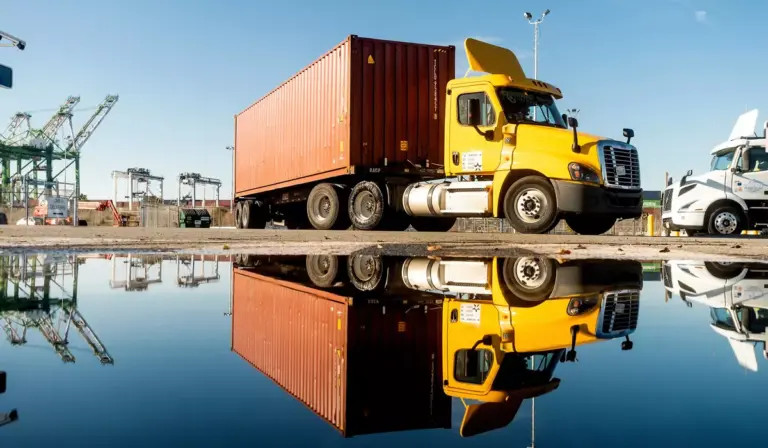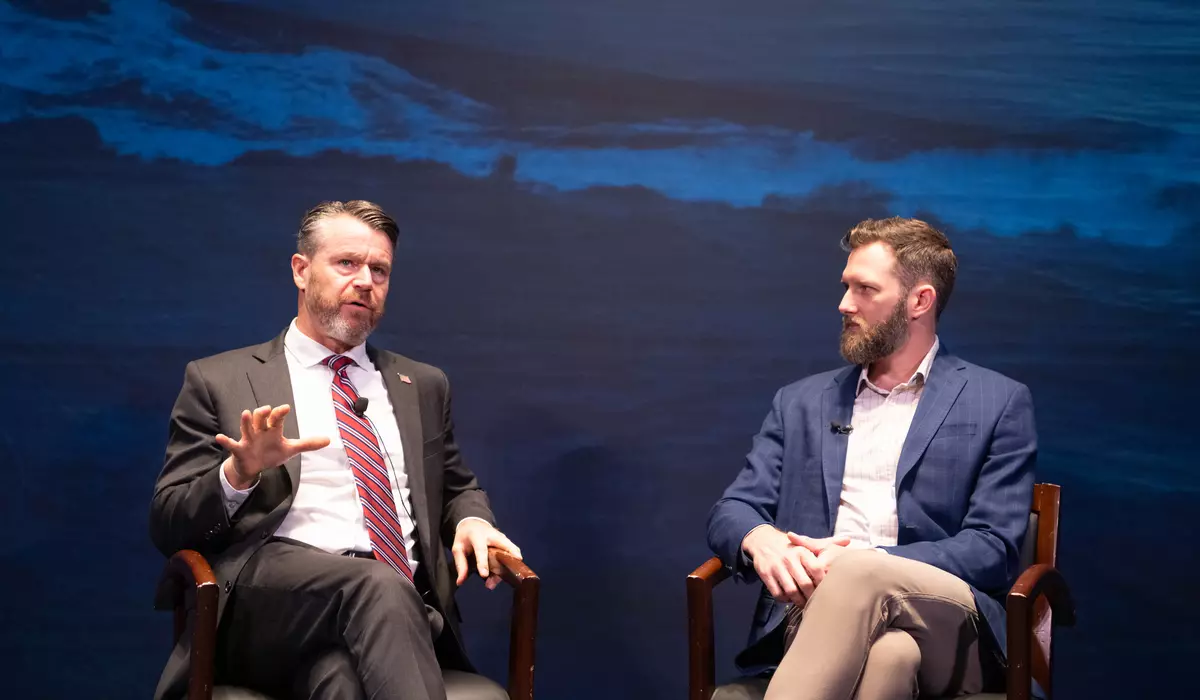

America’s shipbuilding capacity has collapsed — and China knows it. Sen. Todd Young lays out why rebuilding the industry isn’t just about commerce, but about national security and deterrence in the Indo-Pacific.
Read more Tibetan commits suicide by setting himself on fire after China enacts ethnic unity law
Mr. Young tells The Washington Times’ John T. Seward the legislation aims to build 250 vessels over 10 years, expand workforce training, and restore an industrial base capable of supporting the Navy in wartime.
[SEWARD] We’ve talked a lot about the future of the Navy. We’ve talked a lot about our competitors and sort of where we see things going. And we also had Mr. Vought here earlier. And he hit on something that I know you’re very passionate about, which is the shipbuilding industry. Your SHIPS Act.
[YOUNG] I’ve been working quite closely with him, incidentally, on this project.
[SEWARD] It’s a very bipartisan supported piece of legislation. How effective does it feel like it could be right now? This is very hypothetical, but I just kind of want to give you an opportunity to say, this is what we can gain from it effectively.
[YOUNG] Very effective. And thank you for having me on. Thanks to The Washington Times for hosting this event and for all the stakeholders who care so much about this and who have been so deeply engaged in the issue. And the reason they’ve been engaged is because we have a broader problem than just maritime fragility, a lack of robustness in our manufacturing capacity.
The problem is an industrial base that is unable to produce strategic goods, broadly defined, semiconductors, ships, biotech and other things that scale. And we have allowed some strategic industries to migrate offshore. This was a problem with semiconductors. We saw how expensive it can be to claw back this capability.
But in this case, we have an extant industry, we have some existing expertise, and we have a lot of capital overseas and on Wall Street looking to invest in this problem set. Moreover, we have a broader coalition than existed on the semiconductor challenge, irrespective of the fact that I think everyone knew we had supply chain vulnerabilities in the midst of a global pandemic, which exposed those sorts of problems.
So in this case, we have a broad coalition that has made principled compromises around the idea that we need to get started rebuilding our commercial industry in this country. That looks like 250 vessels, which is a stretch goal when you look at our existing capacity. Last year, I’ve been briefed that we built one commercial vessel. Now we want 250.
Read more Kennedy Center sells out tickets to watch July 4th fireworks from rooftop terrace, with top package
[SEWARD]: 250 in 10 years.
[YOUNG] In 10 years, yeah, over 10 years. So we’d, of course, ramp up. We wouldn’t build a tenth of those in year one. But we have some incredibly well-vetted workforce programs to train the next generation of workers. Some of that will be through union training. Some of it will be non-union. We have a well-vetted and existing set of programs to train merchant mariners to reside on those vessels once built. And then, of course, we need to expand our shipyard industrial base.
We’re rightly going to be consulting with some of the most sophisticated builders in the world. The South Koreans are deeply engaged. The Japanese are also engaged. They’re looking to invest, which is what you want, not just because of their capital, but expertise follows capital.
So all the pieces really are in place. And blessedly, this has remained broadly bipartisan. And this has been a congressional collaboration with the White House, OMB most directly, along with the Department of Transportation, some DOW coordination. Lutnick is assisting with a piece of it, the Maritime Opportunity Zone piece. We’ve identified, I think, thoughtful pay-fors.
Now we just need the president to determine that this is going to rise to the top of his legislative priorities. And I think that the table is set for the Ships for America Act to be included in its entirety in the National Defense Authorization Act in coming days.
Now, of course, that would take the president behind a podium or at least indicating that that is his desire through Truth Social. We’re not there at present. So this may be a two-step or three-step exercise where we sort of build in a modular fashion our shipyard industrial base by passing different provisions through different vehicles.
Watch the video for the full conversation.
Get more from John T. Seward
Click here to receive the daily Threat Status newsletter delivered directly to your inbox.
Read more Company kills plan for world’s largest data center hub near Manassas National Battlefield Park

About the Author