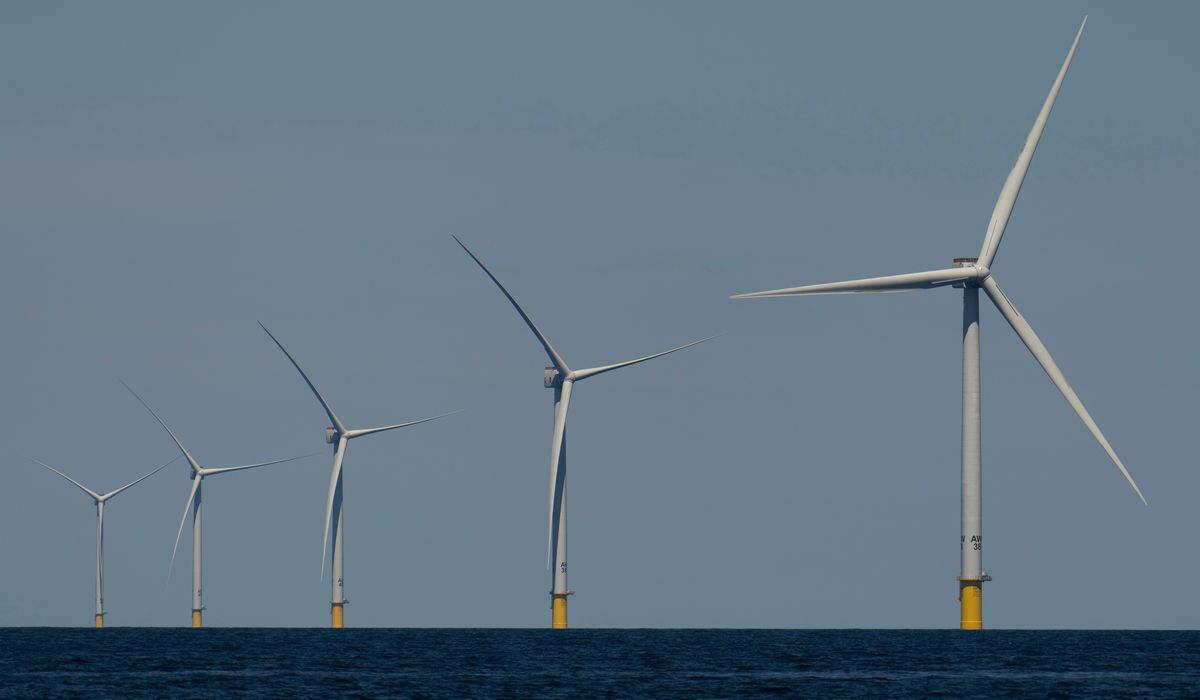
Massachusetts Gov. Maura Healey recently celebrated the completion of Vineyard Wind, the nation’s first commercial-scale offshore wind farm that she pledged would lower electricity rates and remove tons of carbon emissions from the atmosphere.
Read more Trump pardons ‘grease monkeys’ who broke Biden-era strict emissions rules
The project was completed off the coast of Martha’s Vineyard despite lawsuits by residents and environmentalists and the Trump administration’s aggressive anti-wind policies.
And yet Vineyard Wind’s future is murky. Its turbines currently produce less than half the energy promised. The project’s developer is embroiled in a bitter legal battle that company executives say threatens to turn Vineyard Wind’s 62 turbines into a “dormant wind farm graveyard.”
Officials in the Democrat-led state are enthusiastic about the project’s future. Installation of Vineyard Wind’s final three turbine blades was completed on March 13. Soon after, state officials locked in a 20-year purchase agreement that sets the average price of electricity the turbines produce at $69.50 per megawatt-hour, a price that could beat what the state pays for natural gas during some of the coldest weeks of winter.
When fully operational, Vineyard Wind will have the capacity to provide 800 megawatts of electricity, enough to power up to 400,000 homes, Massachusetts officials said.
“Having energy independence instead of being beholden to foreign interests and the oil companies and utility executives who are lining their pockets is the way we’ve got to go in Massachusetts,” Ms. Healey said at an event in New Bedford on June 24 celebrating the completion of the project.
Vineyard Wind’s construction is finished, but the project is a long way from generating the electricity promised or delivering the output needed to keep the wind farm financially viable.
In a May 1 court filing, Vineyard Wind CEO Kurt Moeller said the project’s current average output is roughly 300 megawatts, and 13 of the 62 turbines aren’t yet activated.
Significant remedial and repair work is needed to address “recurrent operational issues,” Vineyard Wind officials said in court documents.
The problems include sensors repeatedly tripping, which causes the turbines to shut off and curtails their performance and power generation.
Vineyard Wind may be left in the lurch.
It is suing to prevent turbine supplier and installer GE Vernova from walking away from the project and maintenance contract, which Vineyard Wind officials said would make it impossible to finish work on the turbines and maintain them to the standards needed to produce electricity.
The two sides are battling over a payment of $360 million that GE Vernova said Vineyard Wind developers owe for the work on installing the turbines.
Vineyard Wind has withheld the funds, arguing the money is a down payment for the $853 million it is owed by GE Vernova for catastrophic damages caused after one of the turbine’s 351-foot blades snapped off in July 2024.
The shattered blade dumped 57 tons of broken fiberglass, foam and plastic into the ocean, much of it landing on the pristine beaches of Nantucket. Federal officials shut down the project for months while GE Vernova officials worked to determine what happened. They discovered the broken blade folded over due to a manufacturing defect that subsequently required the replacement of nearly all of the installed blades in the project.
Read more Washington’s Independence Day parade canceled over hot weather
The dispute has led GE Vernova to decide to quit the project.
A judge has temporarily blocked the company from abandoning Vineyard Wind, but as the legal battle plays out, it has exposed some of the vulnerabilities and costs associated with major offshore wind projects.
“This project has already been plagued by delays, a major blade failure, debris washing onto local beaches, and now litigation. That should give policymakers serious pause before anyone declares it a success story,” said Paul F. Gangi, program director for Massachusetts Fiscal Alliance, a watchdog group.
Vineyard Wind said in its breach-of-contract lawsuit that if GE Vernova walks away, there is no viable replacement that can step in and perform the work. The $4.5 billion project would fail “and leave behind a dormant wind farm graveyard.”
Vineyard Wind’s problems don’t deter officials in Massachusetts and other blue states. Massachusetts plans to build a second Vineyard Wind project and invest in other renewables, Ms. Healey said.
The offshore wind industry, however, is facing significant hurdles from rising construction costs and the Trump administration’s move to halt federal permitting for new projects.
The Trump administration has also spent $2.5 billion to pay several developers to drop their plans to build new offshore wind farms and instead invest in natural gas, geothermal and other energy projects.
President Trump calls offshore wind farms “ugly monsters,” and Energy Department officials say the price of electricity from offshore wind on average is much higher than natural gas, coal or nuclear energy due to the cost of building and maintaining the projects and because the turbines produce power intermittently.
Despite Mr. Trump’s anti-wind policies, several major wind farms are under construction off the coasts of Rhode Island, Connecticut, New York and Virginia.
In Massachusetts, wind turbines provide just a fraction of the state’s electricity. The state gets most of its power from natural gas and nuclear power plants. Residents pay more for electricity than most other states, partly because Massachusetts has blocked pipeline construction and must import liquefied natural gas, which is expensive and subject to a volatile market. The state also charges residents additional money on their utility bills to implement aggressive green energy policies.
“Massachusetts needs affordable and reliable energy. That means recognizing the role of natural gas and nuclear power in keeping costs down and providing dependable, around-the-clock electricity,” Mr. Gangi said.
Ms. Healey said building wind, solar and other renewables expands the grid’s capacity, which prevents blackouts and lowers costs. She said the new rate locked in for Vineyard Wind’s electricity will save consumers a projected $1.4 billion over the next two decades.
“Especially as President Trump is taking energy sources off the table and increasing prices with his war in Iran, we should be leaning into more American-made wind power to lower costs, create jobs, and make our country more energy independent,” she said.
Read more Iran begins dayslong funeral for the late Supreme Leader Ayatollah Ali Khamenei, killed in war
About the Author