
Expansion is usually a sign that a company is doing something right. New employees arrive, departments grow, equipment increases, and additional space becomes necessary. Yet the transition into a larger premises can create an unexpected problem: there may be more belongings than the new workspace can accommodate comfortably on day one.
This is where business storage can become a practical part of an expansion strategy. Instead of forcing every piece of furniture, archived document, spare workstation, or rarely used item into the new premises, companies can create additional breathing room while deciding what should stay immediately accessible.
Why Expansion Creates a Storage Challenge
Moving into a larger office does not necessarily mean every existing asset needs to occupy that space. Businesses often accumulate items gradually, including extra desks, chairs, shelving, promotional materials, trade-show equipment, archived files, replacement technology, and supplies.
During expansion, these belongings can interfere with the setup of the new workplace. Boxes may occupy meeting rooms, equipment can block corridors, and excess furniture may limit the ability to configure departments efficiently.
A carefully planned business storage arrangement separates immediate operational needs from assets that still have value but do not require daily access.
Think beyond temporary clutter
Storage can also help companies avoid making rushed disposal decisions. Furniture that is not currently needed might become useful as the workforce grows. Marketing materials may be required for future events, while specialized equipment could be expensive to replace.
Keeping such assets organized elsewhere allows management to preserve useful resources without allowing them to dominate the new premises.
Match Storage to the Company’s Expansion Stage
Not every business needs the same storage strategy. A small company opening a second location may need space for a modest collection of furniture and supplies. A larger organization could require considerably more room for equipment, records, inventory, or office fixtures.
The right approach begins with an inventory.
Separate belongings into categories such as:
- Items needed immediately
- Assets required occasionally
- Archived materials
- Spare equipment
- Furniture awaiting future use
- Items being evaluated for disposal
This makes it easier to estimate the amount of space required and prevents the storage area from becoming an unstructured extension of the office.
Keep Business Assets Easy to Locate
Storage is most useful when employees can retrieve something without searching through dozens of unidentified containers.
Build a straightforward labeling system
Every box, pallet, or major piece of equipment should have an identifiable reference. Labels can include the department, general contents, and an inventory number.
For example, “IT — Spare Monitors — 014” immediately tells a team member what the container contains and where it belongs organizationally.
Digital records can make the system even more effective. A basic spreadsheet can track the item, storage location, quantity, condition, and date placed into storage.
For companies expanding their premises, Price Movers can help coordinate the movement of business belongings while keeping the transition organized. Their broader moving options can be explored at https://pricemovers.com/.
Protect Equipment During the Transition
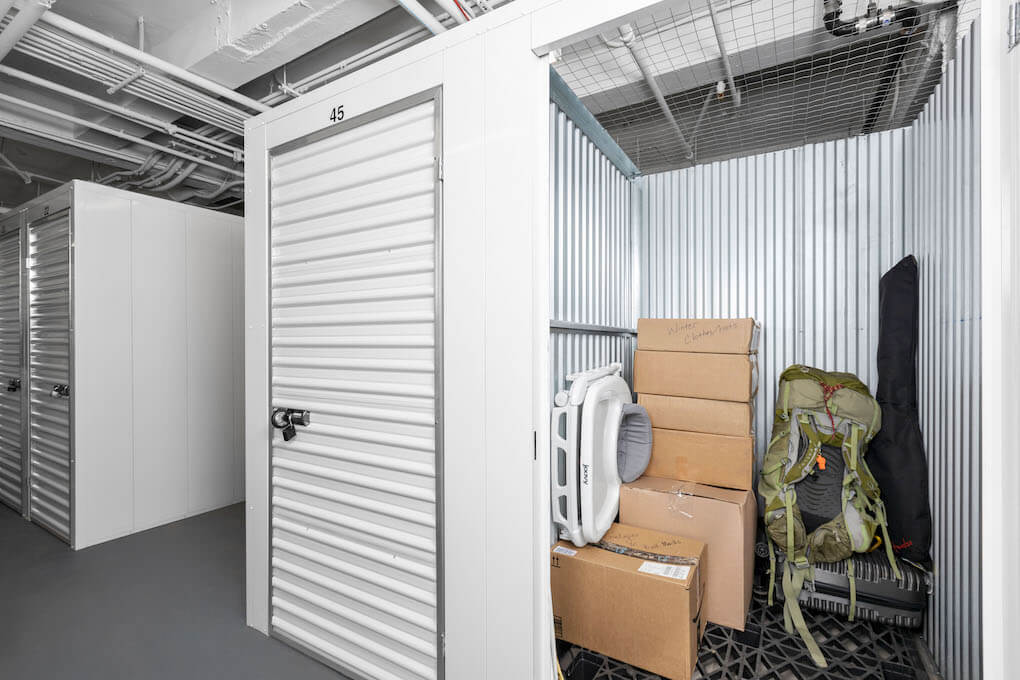
Business belongings may include considerably more than desks and chairs. Computers, specialist equipment, documents, display materials, and other assets may require careful preparation before being placed into business storage.
Sensitive electronics should be packed appropriately, while fragile objects need protection against impact. Furniture should be wrapped where surfaces could become scratched during handling or transportation.
Documentation is particularly valuable for equipment with serial numbers or distinctive components. Photographing important assets before they leave the workplace can provide an additional reference for future identification.
Use Storage to Improve the New Workspace
One of the biggest advantages of storage during expansion is the opportunity to design the new premises around actual operational needs.
Rather than filling every available corner with legacy furniture, management can create clearer work areas, better circulation routes, more practical meeting spaces, and room for future hires.
Business storage can effectively act as a buffer between the company’s current assets and its evolving requirements. Items can remain available without dictating how the new office is arranged.
Review the inventory as the company grows
Storage should not become permanent simply because nobody remembers what is inside. Schedule periodic reviews and ask whether each stored item still serves a purpose.
As departments expand or operations change, some assets may return to the office, move to another branch, or become candidates for recycling or disposal.
A thoughtful storage system therefore does more than remove boxes from an expanding workplace. It gives the company time and flexibility to grow into its new premises without sacrificing useful assets or allowing unnecessary clutter to slow down the transition.
About the Author