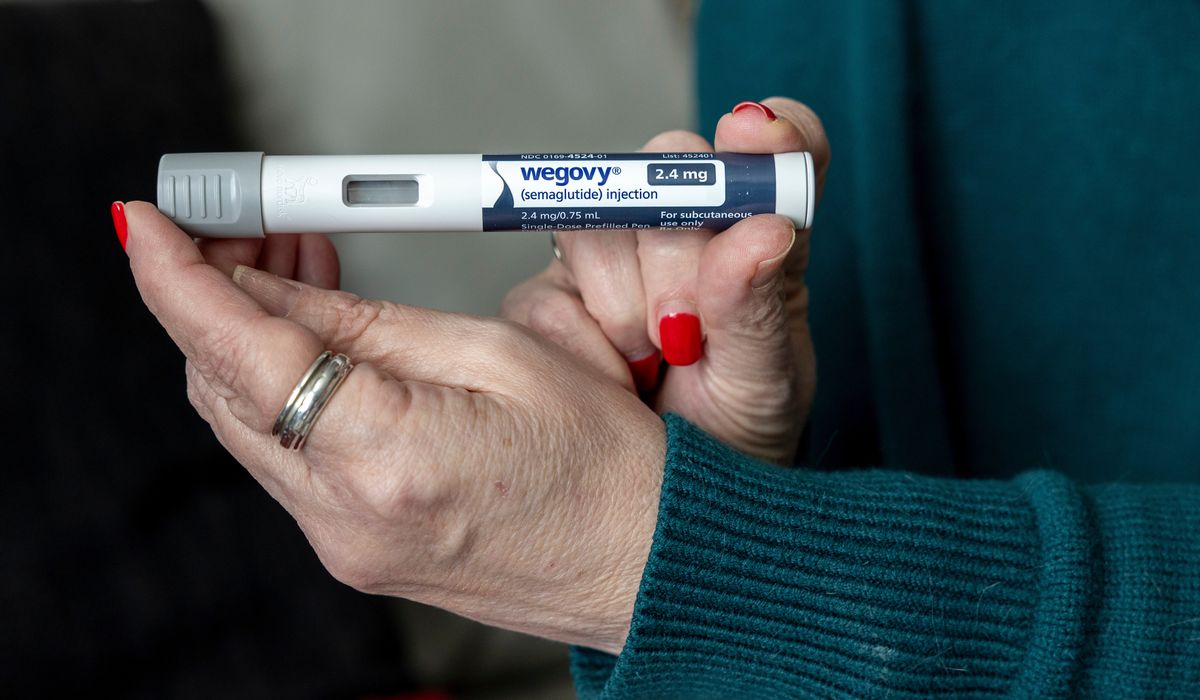
Most websites dispensing GLP-1 prescriptions are shipping generic knockoffs the same day without contacting patients’ doctors or screening for health risks, according to a Yale University study published this week.
Read more Sanders says Platner should quit Maine Senate race
A Yale medical student posed as a weight-loss patient between August and December. He found that 91.8% of 49 leading telehealth clinics issued the scripts without requiring more than a self-reported questionnaire and upper-body photograph.
An additional 69.4% of clinics shipped branded and compounded GLP-1s within 24 hours of receiving the cursory application — including two that mailed them within five minutes.
That’s nearly half of the over 100 telehealth clinics nationwide dispensing GLP-1 drugs, which pose major health risks to patients using them without medical supervision and for purely cosmetic reasons.
Only four of the 49 websites denied the prescription applications. Two required blood work, one detected the student’s existing prescription on another website and the fourth detected a mismatch between the patient’s photo and reported weight.
GLP-1, which stands for glucagon-like peptide-1, helps people lose weight.
Ashwin Chetty, the fourth-year Yale University medical student who posed as the study’s “secret shopper,” said the results confirm some telehealth doctors may not even glance at what patients submit before signing the prescriptions.
“Limited clinician involvement and not collecting critical patient history indicates that online GLP-1RA prescribing often falls far short of accepted standards of care, and puts patients at risk of harm,” Mr. Chetty told The Washington Times.
He called on the Food and Drug Administration to close a regulatory loophole that lets telehealth clinics sell compounded copycats of weight-loss drugs such as Wegovy and Mounjaro that drive the online market.
Mr. Chetty was one of four Yale medical researchers who published the findings Monday in the Journal of the American Medical Association. Their paper noted that 1 in 5 adults obtains GLP-1 prescriptions online.
Originally designed to lower blood sugar in diabetics, GLP-1s have driven billions in sales since pharmaceutical companies repackaged them for weight loss.
Doctors warn that dramatic side effects require regular exercise and medical supervision to use the drugs safely.
GLP-1 medications carry an FDA black box warning for thyroid cancer risk and require pancreatitis screening before prescribing — neither of which can be assessed through a self-reported questionnaire.
The drugs have also spawned a rash of social media buzzwords for unlabeled side effects — including “Ozempic face,” “Ozempic breath,” “Ozempic personality,” “Ozempic zombies” and “Ozempic teeth.”
Several outside medical experts insisted in interviews that the Yale study should ring an alarm bell for federal regulators.
“The idea that weight loss is easy and meds have no risk is out of control and needs to be reined in,” said Dr. Muhammad Ghanem, a bariatric surgeon at Orlando Health in Florida and a board-certified obesity specialist. “Burying one’s head in the sand does not lead to good outcomes.”
“We need some governing body that controls the dispensing of these medications and ensures a minimum standard of care,” added Dr. Damola Aje, an endocrinologist at Berkshire Medical Center in Massachusetts.
’Low-oversight prescribing’
Dr. Elizabeth Rubin, an emergency medicine specialist in Phoenix, noted that GLP-1 side effects have driven a growing number of emergency room visits.
“These include chronic nausea, vomiting and dehydration, which may be reduced through better patient education, slower titration of medications and follow-up care,” Dr. Rubin said.
Nevertheless, some telehealth advocates pushed back on the findings.
“The entire survey ran through one synthetic patient profile, which means every site saw the same inputs and the same reported health history,” said Ryan Michaels, a biotechnology research analyst at PepThrive, which sells GLP-1 substances for lab research. “Real patient populations don’t behave that way, and some platforms may perform better when the intake data is more varied.”
Dr. Fernando Ovalle, an obesity specialist and reviewer for Drugwatch.com, which tracks medication side effects, called the study “a snapshot [that] definitely does not represent all telehealth obesity care.”
Read more Trump lays into NATO allies at summit kickoff, says Europe is ‘a very different place’
“Low-oversight prescribing is the problem rather than just the use of telemedicine itself,” he said.
The FDA did not respond to an email seeking comment.
The federal agency approved Ozempic as an insulin-boosting treatment for Type 2 diabetes in 2017.
Dramatic weight loss in early patients led Novo Nordisk, the Danish company with exclusive selling rights, to repackage Ozempic. In 2021, the FDA approved Wegovy, a version of the drug prescribed for weight management.
A Novo Nordisk spokesperson insisted this week that the company “works with a range of healthcare organizations, including telehealth providers, to help patients access authentic” Wegovy.
“We continually review our collaborations to ensure they reflect our commitment to patient safety and responsible prescribing under the supervision of a qualified healthcare professional,” the spokesperson said in an email, commenting on the Yale study.
The FDA approved Eli Lilly’s rival GLP-1 drug Mounjaro for Type 2 diabetes in 2022. An explosion in sales led the FDA to greenlight Lilly’s Zepbound, a version prescribed for weight loss, in November 2023.
A Lilly spokesperson noted that the Indianapolis company’s self-pay pharmacy charges $299 a month for FDA-approved Zepbound.
“Patient safety is our top priority, and we remain concerned about the risks associated with mass-compounded and unauthorized versions, including those sold through telehealth platforms that market them as ’personalized’ or ’tailored’ treatments,” the spokesperson said in an email.
Popular medicine
Surging demand for GLP-1 medications among the nation’s more than 100 million obese adults has threatened to overwhelm clinical guidelines.
A Gallup poll released Tuesday found that a record-high 11% of adults take GLP-1 medications for weight-loss purposes, up from 3% in 2024.
On July 1, nearly 4 million older adults enrolled in Medicare gained access to GLP-1 drugs through a $50-a-month copay initiative, further expanding the market.
Most adults still pay up to $1,300 a month for the appetite-suppressing medications, despite their costing about $35 to manufacture.
By comparison, online clinics such as Orderly Meds and Trimi advertise compounded versions of introductory doses starting at $69 a month.
Joseph Zucchi, a physician assistant and clinical supervisor at Transition Medical Weight Loss in Salem, New Hampshire, insisted “there is a major difference between real telehealth care and a website that is built primarily to move a prescription as fast as possible.”
The Yale study found that 98% of online prescription vendors asked about medical conditions on their intake questionnaires. An additional 93.9% asked about medications and allergies on the forms.
At the same time, 79.6% of online clinics asked about weight-loss goals, and 65.3% asked if patients tried losing weight without drugs. A little more than half asked about eating disorders or about diet and exercise habits.
Just 26.5% of the websites required a video visit, and only 6.1% requested a phone call before shipping the drugs — leaving others to rely on the questionnaires, despite most eating disorders going undiagnosed.
“It’s a clinician waving people through, not patient care,” said Dr. James J. Chao, who prescribes GLP-1 medications as part of a weight-loss program at VedaNu Wellness in San Diego.
“State medical boards need to start auditing doctors who are writing hundreds or thousands of telehealth prescriptions each month,” he added. “And online platforms need to verify identity and at least basic baseline health data before releasing any prescriptions to pharmacies.”
Read more NYC’s Zohran Mamdani says it is time for Graham Platner to call it quits in Maine
About the Author