Wins on immigration. A major loss on birthright citizenship. A split decision on his power to fire federal officials. President Trump’s Supreme Court report card is anything but simple.
Read more Mick Jagger says John Lennon’s advice cost him a meeting with Elvis Presley
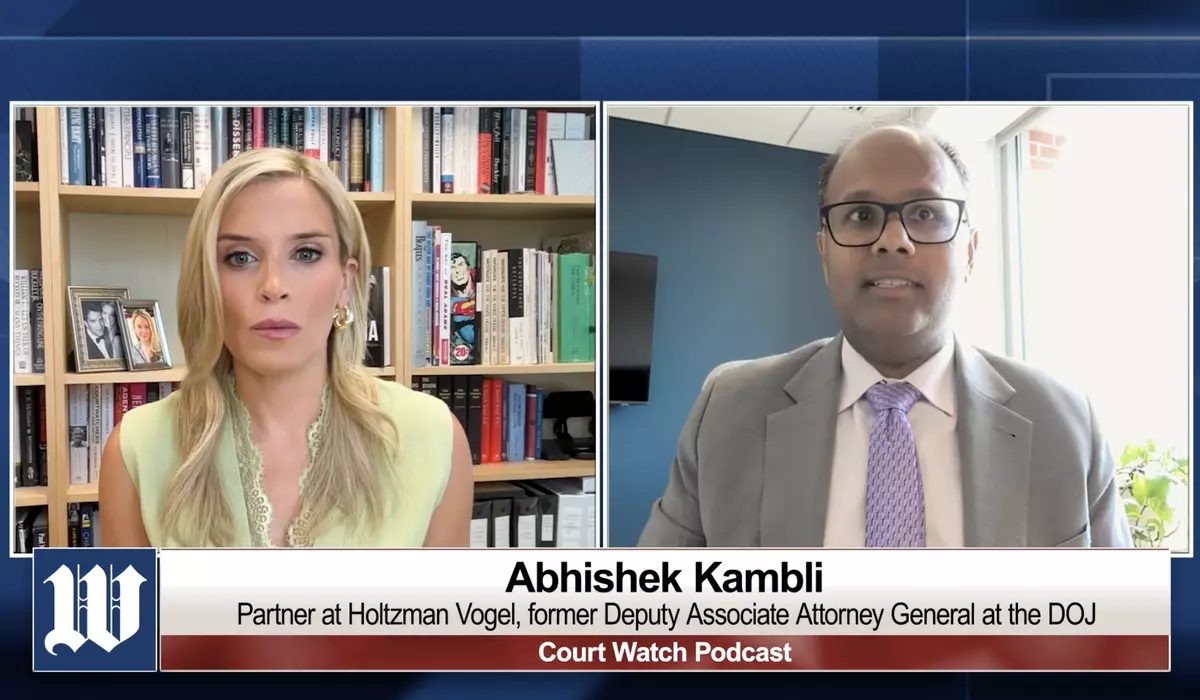
Washington Times Editor -at-Large Alex Swoyer and former Trump DOJ attorney Abhishek Kambli break down what the justices got right, what they got wrong, and what it means heading into the next term.
On the immigration front, President Trump did score a win with the justices when they ruled that his administration can end what’s called Temporary Protective Status for Haitians and Syrians who are currently in the U.S. They had challenged their removal, saying they weren’t given a due process right. But the justices said they weren’t able to challenge this. This was not for the court to decide. It was an executive branch issue, which was a major win for the president.
However, he had a major loss on immigration. The justices struck down his executive order ending birthright citizenship. And in their ruling, they said the 14th Amendment essentially guarantees U.S. citizenship to anyone who was born on U.S. soil.
This term also saw a pair of cases where he had a win and a loss on his ability to fire people. President Trump tried to fire a member of the Federal Trade Commission, Rebecca Slaughter. She challenged that and said that she was not able to be removed. However, the court said that the president did have authority to remove some of these officials within executive branch agencies.
They separated this from a separate case that was involving the Federal Reserve. Lisa Cook was fired by the president. And she challenged her removal. The justices said the Federal Reserve is different because they tied it to the monies of the U.S., tracing back all the way to Alexander Hamilton in the talk that the Treasury, financial, the Federal Reserve, banks, for example, should be nonpartisan and not have any sort of political leaning one way or the other.
So there was a kind of split in terms of immigration and firings in terms of whether the president won those major decisions.
He also had his tariff fight earlier this year before the court, where he had a loss in February. The administration has been able to implement these tariffs in a different way. But of course, that was a major decision when it came down against the Trump administration.
There was also some major election-related victories and decisions handed down this term. One decision rewrote the underpinnings of the Voting Rights Act. It made sure that there’s more of a colorblind approach for when states draw their congressional district maps. That case, it’s Callais vs. Louisiana, was ignited in a round of redistricting that’s going on now in Republican-led Southern states, and Democrats are vowing to try to retribute and redraw their own lines in blue states.
The court essentially ruled there that so long as the state redistricts their map with partisan intent and not based on race, the map can be upheld.
There was another case that involved mail-in ballots in a dispute out of Mississippi. The court ruled against the Republican National Committee here, which was important. They challenged Mississippi’s law that allowed for mail-in ballots to be counted up to five days past election day. The RNC had argued, no, no, there’s only one federal election day. Ballots should be counted then, something the president has really pushed for. But the court did not go to that argument. They sided with Mississippi and upheld that law. This allows states to go ahead and set their own counting measures. I think Washington state’s 21 days, Illinois is 14 days. So that was a loss for those Republicans who are looking to try to rein in mail-in ballots.
I want to get to one of the major cases of the term that people were questioning about was transgender athletes and their ability to compete in girls’ sports. Idaho and West Virginia had passed laws that said only biological girls can compete in girls’ sports. Those were challenged by transgender athletes, basically saying they were discriminatory under the Equal Protection Clause of the Constitution, and they won in lower courts. So the girls and the states appealed to the justices and said, no, please overturn this lower court decision. And they did. The justices said that states can pass these types of laws that ensure biological girls compete in girls’ sports. It was seen really as a major loss for the LGBTQ community.
On the issue of guns, the court did side with Second Amendment advocates in a case out of Hawaii. Their law there had said that those who have a permitted lawful carry concealed weapons license must actually also get explicit permission to carry on private property, even if the property is generally open to the public. So think about restaurants, for example. The majority of the court ruled that the law runs afoul of your gun rights, your constitutional rights.
Read more Trump calls on ICE to continue traffic stops, contradicting agency’s pause following fatal shootings
[SWOYER] What do you think was the most important ruling that the justices handed down this term? And why was it so consequential?
[KAMBLI] I think the biggest case that at least involved the Trump administration would be the Slaughter case. Anyone who’s been involved in the conservative legal movement knows that for almost 100 years, that’s been something that conservatives have been trying to get overturned. And even though the result was widely expected, it is very meaningful for what it means for executive power and the fact that the presidency ultimately belongs to the president. And that even Congress can’t interfere with the president’s core removal authorities in order for him to do his job. I think it will have a lot of meaning for whenever someone runs for president. You can have greater assurance that they’ll be able to carry out the agenda that they promised voters. So even though there were some other cases that got a lot of attention and this one you know kind of fell to the backdrop because of how expected it was, people shouldn’t lose track of how important this case was.
[SWOYER] The Rebecca Slaughter case, Federal Trade Commission, President Trump fired her. That was challenged, saying it’s an executive branch agency. He doesn’t have authority over that firing. But the court said, yes, I guess it gives the president more power to control those leading various agencies within the executive branch. This was always talked about in combination with Lisa Cook, with the Federal Reserve, and his attempt to remove her. And that was also before the court this term. And they went the other way there. They sided with Lisa Cook. I think they basically said that she deserved more of maybe a procedural due process right to challenge a firing. Is that how that came down?
[KAMBLI] The Solicitor General and DOJ generally did not argue the same constitutional arguments in Cook that they did with Slaughter. Instead, they argued that they had cause to remove her. And the Supreme Court concluded that there is some type of due process that’s required.
[SWOYER] I think it was a Truth Social post, was that how he fired her.
[KAMBLI] I don’t know the details of exactly how it went down, but I mean when the president is the one that’s terminating, that brings up some questions of what exactly does due process look like? Does that mean you get a meeting with the president and get to pitch your case? And given all the multitude of other things that the president has to do that voters want him to do. But the other thing that they also concluded, even though the DOJ didn’t argue it, they reached the constitutional question of whether the statute is constitutional or not, which normally they don’t do if that’s not an argument in front of them. But I guess they felt the need to assure the markets of something.
They basically decided that the Fed is just in a different category, and they used the First and Second Banks of the United States, which, interestingly enough, is not the best example because both Thomas Jefferson and Andrew Jackson eliminated those banks in part because of constitutional concerns. So that was kind of the history and tradition that they relied on for the Fed being different.
And of course, the Fed has a lot more power than those two banks did. So that was how they reached the result. But that ruling is basically limited to the Fed. And I don’t see too many other agencies that it would apply to. So even though that didn’t go the Trump administration’s way, that doesn’t necessarily mean it’s going to have much effect beyond the Fed.
[SWOYER] It sounds like she could challenge her firing and lower courts will consider it. Could it work its way back to the justices eventually?
[KAMBLI] Theoretically. I don’t know what that would look like in practice. But I mean, it answered the merits in many ways, so I don’t see that coming back. At least not in this court.
[SWOYER] This is probably the case that I get asked the most about is birthright citizenship. And so my question for you is, a lot of people are saying, oh, well, could Congress have done something here to address it, to help bolster President Trump’s executive order?
It sounds like the opinion by Chief Justice Roberts was pretty broad, upholding the 14th Amendment as guaranteeing birthright citizenship to anyone born on U.S. soil. So, you know, I don’t really see a way that Congress could step in here to correct this. What’s next?
Read more Republicans release budget instructions for filibuster-proof defense, SAVE America Act package
Watch the video for the full conversation.
Read more: Trump claimed some big wins at Supreme Court, former DOJ lawyer says
Get more Court Watch with Alex Swoyer.
About the Author