OPINION:
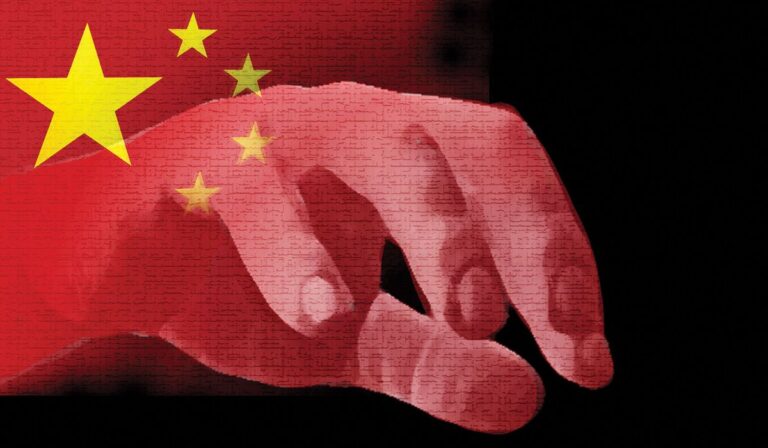
The revelation by President Trump that U.S. intelligence knew that the Chinese Communist Party acquired data on some 220 million American voter files should not be viewed merely through the narrow lens of election security.
Read more House Republican draws red line: won’t back Iran war supplemental without SAVE America Act or offset
The episode fits a decades-long pattern of Chinese strategic behavior. The newly declassified documents state that Chinese intelligence devoted specialized units to exploiting this data and regarded centralized election databases as valuable intelligence targets.
The real story is not about one election. It is about one regime and the regime’s grand strategy.
For several decades, communist China has carried out the largest campaign of state-sponsored information theft in human history. No empire has ever collected so much data on so many foreign citizens. No intelligence service has ever pursued information on such an industrial scale.
What Beijing seeks is not simply secrets. It seeks the raw material of national power.
Western democracies still tend to think of espionage in Cold War terms: stealing military plans, recruiting spies, photographing missile sites, intercepting diplomatic cables. China thinks much bigger.
Under the CCP, every database is a weapons depot. Every server is strategic terrain. Every citizen’s digital footprint is a potential intelligence asset.
The targets reveal the strategy.
In 2015, Chinese agents penetrated the U.S. Office of Personnel Management and stole the security clearance files of more than 21 million current and former federal employees. These included fingerprints, financial histories, foreign contacts, psychological evaluations, marital problems, medical records and the intimate details required for the government’s most sensitive background investigations.
Intelligence professionals immediately understood what had happened: China had acquired an owner’s manual for identifying, recruiting, blackmailing or tracking America’s national security workforce.
That same year, Anthem, the second-largest health insurer in the U.S., lost nearly 80 million health records to Chinese hackers.
Two years later came Equifax, where the personal financial information of roughly 147 million Americans fell into Chinese hands. The U.S. Department of Justice eventually indicted four officers of the People’s Liberation Army in the operation.
Marriott’s Starwood database exposed 383 million international travelers’ registration records to Chinese hackers in 2018, complete with passport numbers, travel histories and personal preferences.
In 2021 came the Microsoft Exchange attacks, perpetrated by the Chinese state, compromising tens of thousands of organizations across government, academia, defense and industry. Two years later, Chinese hackers targeted the U.S. Naval Undersea Warfare Center in Newport, Rhode Island, stealing sensitive data on submarine warfare and other military technologies.
Viewed separately, each incident appears alarming. Viewed together, they are the unprecedented systematic construction of a global intelligence archive.
America is not unique. Canada’s National Research Council lost decades of scientific research. Australia endured coordinated cyber campaigns against government agencies, critical infrastructure, universities and Parliament.
Germany’s federal ministries were penetrated. India’s power grid, telecommunications firms, pharmaceutical companies and government ministries became repeated targets, particularly during periods of military tension along the Himalayan border.
Read more Trump signs order to make U.S. supply chains more secure, less reliant on foreign nations
Norwegian institutions associated with the Nobel Peace Prize were reportedly attacked after the award was given to Chinese dissident Liu Xiaobo.
Perhaps the most astonishing case emerged from Africa. For nearly five years, data from the African Union’s headquarters — built and equipped by China — was copied nightly to servers in Shanghai before the operation was discovered.
Unlike the Soviet Union, whose espionage largely served military and ideological competition, the CCP recognizes no distinction among military, commercial, political, technological or personal intelligence.
Under Xi Jinping’s doctrine of Military-Civil Fusion, information collected anywhere can be used everywhere. A database stolen by the Ministry of State Security today may help a state-owned enterprise tomorrow, a PLA artificial intelligence laboratory next year, and a political influence campaign years later.
In other words, China steals first and decides later how to use the information.
Quantity itself becomes strategic quality. This is where many Western observers fundamentally misunderstand the CCP. They ask, “Why would China want voter registration files?” They should instead ask, “Why would China not want them?”
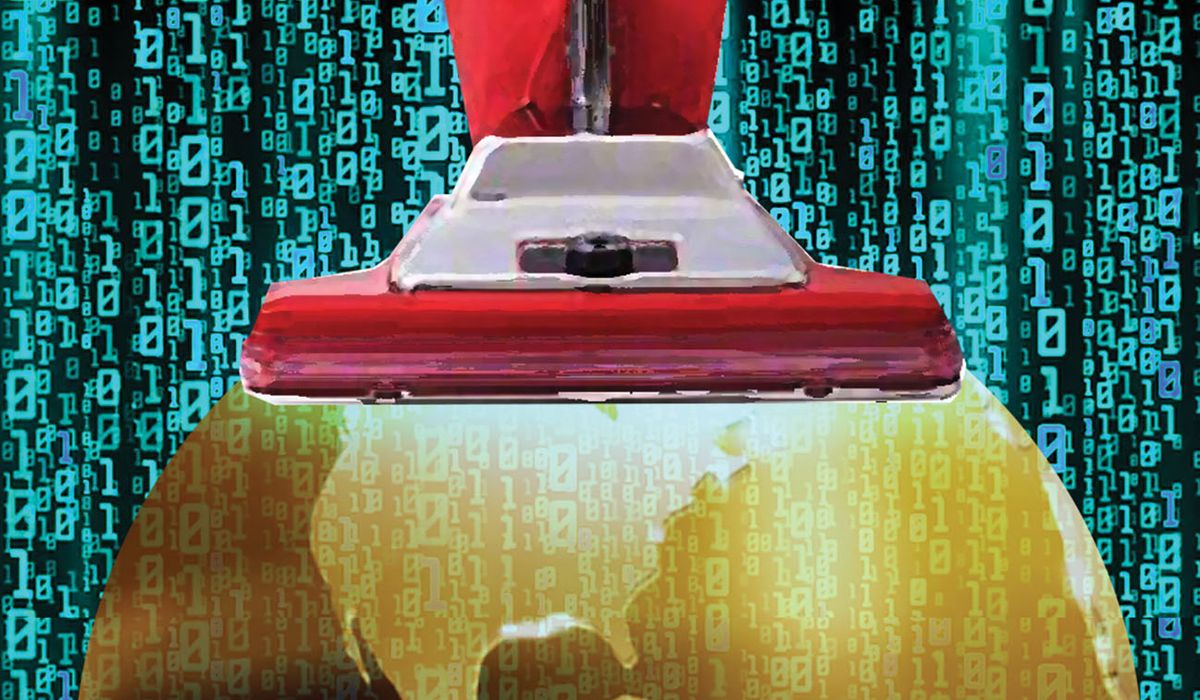
The CCP’s intelligence philosophy is built on accumulation. Every data point is a puzzle piece. A voter file alone may reveal little. Combined with commercial purchasing data, health records, travel histories, social media profiles, financial information, leaked passwords, facial recognition databases, genetic information and artificial intelligence, it produces something far more valuable: an extraordinarily detailed map of an entire society.
Authoritarian regimes govern people. Totalitarian regimes govern information. The CCP intends to do both.
Artificial intelligence has only accelerated this ambition. Modern AI systems thrive not on brilliant algorithms alone but on enormous datasets. Whoever possesses the world’s largest reservoirs of personal information enjoys an enormous advantage in predictive analytics, facial recognition, behavioral modeling, social network analysis, influence operations and intelligence targeting.
Data has become the oil of the 21st century. China intends to own the oil fields.
This is why describing Chinese cyberoperations as “hacking” understates the problem. Hacking suggests isolated criminal acts committed by anonymous technicians. What China practices is organized state extraction of strategic resources. The objective is not financial gain but geopolitical advantage.
The newly released intelligence regarding American voter data should therefore be understood within this much larger strategic context. For too long, democracies have treated each Chinese cyberintrusion as an isolated incident — a corporate breach here, a government compromise there.
The CCP counts on precisely that reaction. It understands what free societies often forget: History is written not by isolated events but by persistent patterns — and the pattern is unmistakable.
China is not stealing data because it is curious. It is stealing data because information has become the decisive strategic resource of the digital age. Previous generations fought over oil fields, steel mills and sea lanes. The defining struggle of this century will be over databases.
The nation that masters information will possess an enduring advantage in intelligence, technology, commerce, diplomacy and war. The CCP recognized that reality long before the West did.
The question is whether America has finally realized it.
• Miles Yu is the director of the China Center at the Hudson Institute. His “Red Horizon” column appears every other Tuesday in The Washington Times. He can be reached at [email protected].
Read more Is Mojtaba Khamenei still in Iran? Supreme leader’s whereabouts unclear as speculation grows
About the Author