A new report finds nearly 1 in 5 workers tested positive for illicit drugs last year, as increased marijuana use drove up “persistent long-term” substance abuse across the workforce.
Read more House defense bill seeks Pentagon report on malign Chinese influence in South Korea
Quest Diagnostics found the share of employees who tested positive on a hair screening for substances such as marijuana, cocaine and opiates rose from 13.1% in 2021 to 19.1% in 2025.
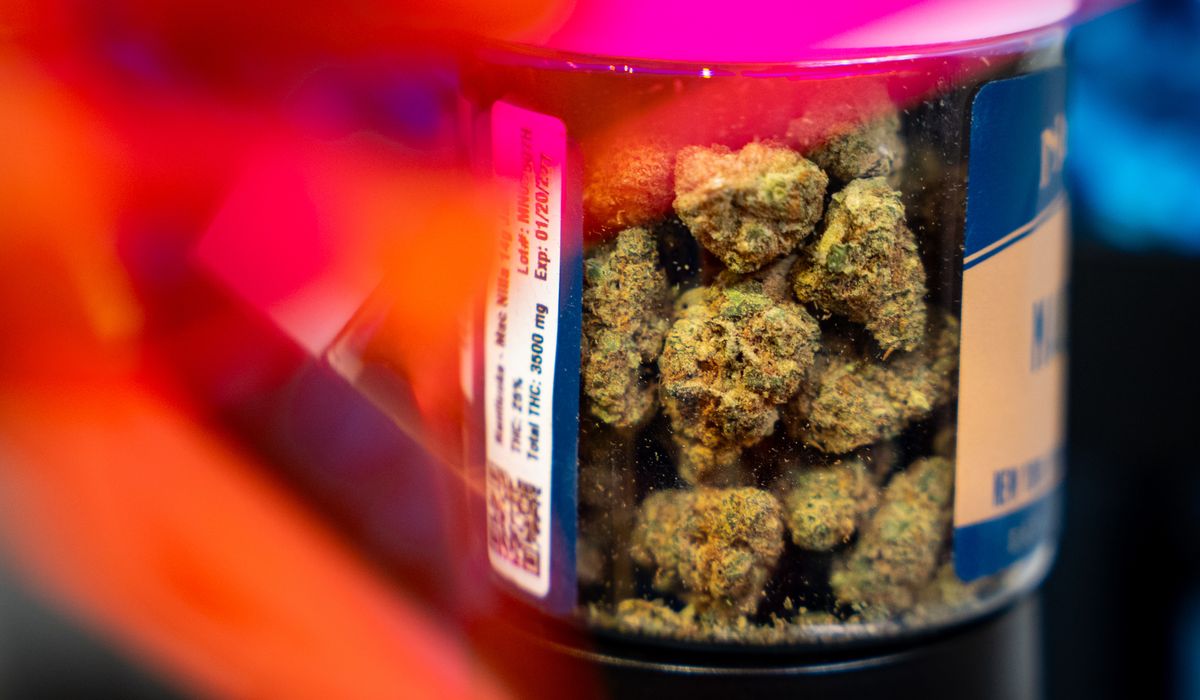
The nation’s leading drug-testing lab called cannabis the “primary driver,” noting that it accounted for 52.5% of positive hair tests last year. The share of marijuana-positive workers increased by 58.9% over the period, from 9.5% to 15.1% of hair tests.
“Chronic use of some drugs, like marijuana, may impair judgment, reaction time and decision-making in ways that aren’t always obvious day-to-day,” Jason S. Hudson, Quest’s scientific and laboratory director, told The Washington Times.
Cocaine finished a distant second in positivity rates, inching up from 2.7% of all hair tests in 2021 to 4% last year.
The share of workers testing positive for methamphetamine, the third most common substance, rose from 2.1% to 2.5% of hair tests.
Quest noted that the ability of hair analysis to detect drug use during the preceding 90 days makes it more reliable than saliva or urine tests — and more resistant to being faked, as some workers do by swapping fluids on urine tests.
Among the 8 million employment drug tests Quest conducted last year, 4.3% of urine analyses were positive for marijuana within the past one to three days, unchanged from the previous year.
An additional 11.1% of oral fluid tests were positive for marijuana within the past several days compared with 15.1% of hair tests.
“Hair testing is important because it points to regular, ongoing drug usage, which can be a meaningful safety concern for employers, especially in safety-sensitive industries,” Mr. Hudson added.
Quest found that pre-employment marijuana use increased by 49.5% last year, from 10.1% of hair tests in 2021 to 15.1% in 2025. Randomized workplace hair testing increased by 14.8% over the same period, from 18.3% positive in 2021 to 21% last year.
The findings triggered alarm among health experts and pushback from marijuana enthusiasts.
“It doesn’t tell us they were impaired at work,” said Jerry Joyner, a Texas-based cannabis advocate. “We need to be careful not to equate historical use with real-time impairment.”
Demitri Downing, founder of the Marijuana Industry Trade Association, said: “Alcohol testing generally asks, ‘Are you impaired now?’ Cannabis testing often asks, ‘Have you used cannabis at some point since the last season of your favorite television show?’”
Health experts countered that marijuana can impair reaction time, attention and memory for up to 10 hours after use.
“Employers have to ask whether they’re creating workplaces where people can perform at their best and where everyone around them is protected,” said Richard Taite, founder and executive chairman of Carrara Treatment Wellness & Spa, a Southern California rehab facility.
Quest found that 5.8% of healthcare workers tested positive for drugs last year, the most in any industry.
Retail trade had the highest marijuana positivity, with 7.6% of workers failing tests.
“Employees generally should not be intoxicated on the job,” said Dr. Allen Masry, an addiction psychiatrist and medical director of All in Solutions, a network of treatment centers.
He said that applies to “especially those who operate heavy or complex machinery, provide care for others, or who would otherwise pose a risk to themselves or others.”
Legalization effects
Dozens of states have legalized marijuana for medical or recreational use over the past decade, prompting a surge in usage.
It remains illegal under all circumstances in just five states: Idaho, Kansas, Nebraska, Wyoming and South Carolina.
“Legalization has brought about a dramatic increase in the potency, addictiveness and availability of cannabis,” said Keith Humphreys, a Stanford University psychologist and addiction researcher.
He said Quest’s hair testing numbers echo population surveys that have found “a large increase in the proportion of users who consume cannabis” daily.
Read more Senate panel to take up kids online safety, AI bills in early August
In November 2012, Colorado and Washington became the first states to legalize marijuana for recreational purposes.
The AAA Foundation for Traffic Safety later reported that the percentage of Washington drivers in fatal crashes who tested positive for the psychoactive ingredient THC (tetrahydrocannabinol) doubled afterward — rising from 8.8% between 2008 and 2012 to 18% between 2013 and 2017.
Ragina Ali, a spokeswoman for AAA Mid-Atlantic, said delivery workers and others who drive for a living should treat marijuana the same as alcohol.
“Legal does not mean safe when it comes to operating a vehicle,” Ms. Ali said. “If you’re impaired, you shouldn’t be behind the wheel.”
Another AAA Foundation survey found that roughly half of cannabis users falsely believed the substance has little to no effect on their driving — and 84.8% said they drove the same day after consuming it, including 53% who got behind the wheel within an hour.
More broadly, a2024 JAMA Health Forum study linked recreational marijuana sales to a 10% increase in workplace injuries among workers ages 20 to 34.
Changing norms
Workplace experts cautioned against firing employees who test positive for marijuana before verifying if they use it at work and giving them a chance to change.
“The strongest organizations hold employees accountable for safety while also creating a culture where asking for help is supported,” said Shelly Barry, senior vice president of human resources at Recovery Centers of America.
Aaron Hall, a Minneapolis business attorney who advises employers on workplace drug policies in Minnesota, noted that hair tests can help safety-sensitive employers pay attention to workers who might abuse marijuana on the job.
“Rewrite the policy so it defines the problem as observed impairment on the job, train supervisors to document what they actually see, and reserve testing for the situations the policy names,” said Mr. Hall, whose state legalized recreational cannabis in 2023.
Quest’s findings demand empathy for workers struggling to get by, said Matthew A. D’Urso, clinical director at Renaissance Recovery.
“We have normalized using substances just to get through the week, and companies need to look beyond the typical disciplinary measures,” Mr. D’Urso said.
Michael DeShields, a New Jersey addiction medicine physician who advises the Discovery Institute rehab facility, urged supervisors to help addicted workers get treatment and return to the job.
“Employees are entitled to obtain medically necessary care for substance-related disorders,” Dr. DeShields said. “They do not have the right to perform their job duties under the influence.”
Addiction counselors warned that legalized marijuana has higher concentrations of THC than the homegrown products earlier generations of Americans consumed.
“Higher-potency products have increased the potential for greater impairment and problematic use in vulnerable individuals,” said Phil Smyth, a licensed substance abuse counselor and executive director at Milestone Treatment Center.
The average marijuana plant has jumped from 1% to 3% THC content in the 1970s to 18% to 23% today, according to Smart Approaches to Marijuana, which tracks the harms.
The group estimates that workers who test positive for marijuana have 55% more industrial accidents, 85% more workplace injuries and 75% more missed workdays.
“Normalize marijuana and tell people it’s medicine, and more of them show up impaired at work,” said Kevin Sabet, CEO of Smart Approaches to Marijuana. “That’s exactly why rolling back workplace drug testing for truckers, pilots and school bus drivers under marijuana rescheduling is so reckless.”
Marijuana remains illegal at the federal level. But in April, the Trump administration reclassified state-licensed and FDA-approved cannabis as a less dangerous substance and is considering doing the same for all marijuana nationwide.
The White House did not respond to a request for comment on the Quest report.
A spokesperson for the Substance Abuse and Mental Health Services Administration urged employers to implement the federal Drug-Free Workplace Program.
The program requires federal contractors and grant recipients to publish a written drug policy, report violations and provide addiction awareness services.
“Organizations not covered by these requirements may still decide to meet some or all of [them] in their drug-free workplace policies,” the spokesperson said in an email.
Read more Trump plugs states, utilities into pledge for Big Tech to pay for data centers’ energy bills
About the Author