OPINION:
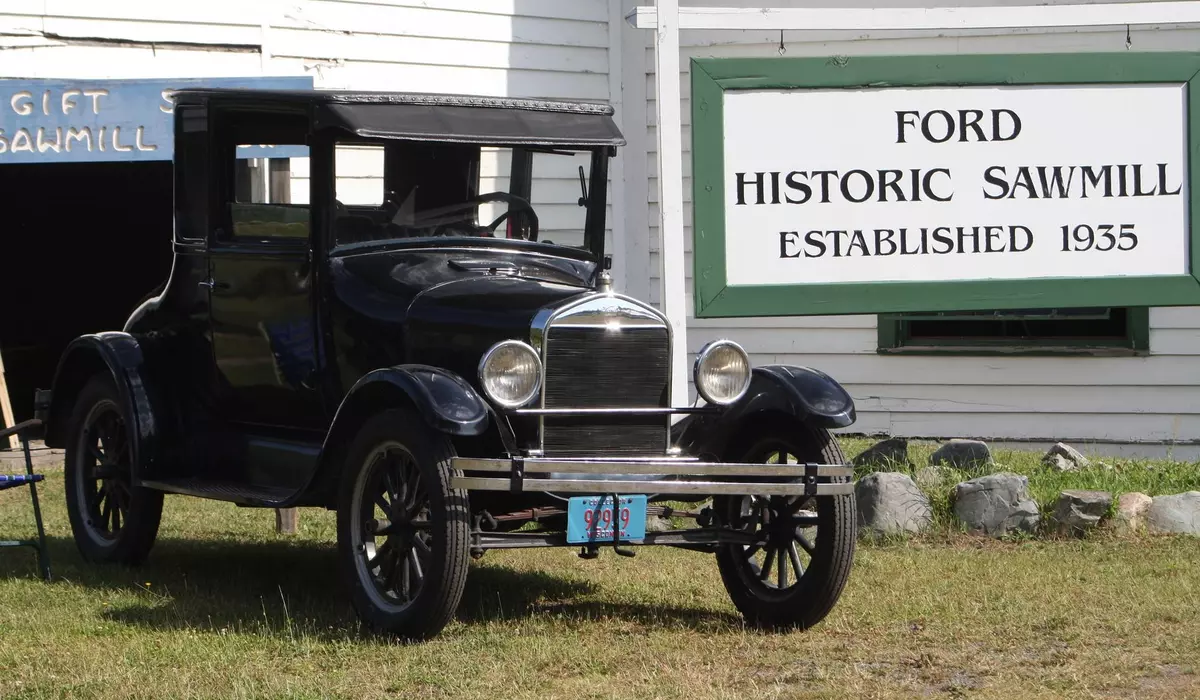
On July 23, 1903, Henry Ford, down to his last couple of hundred dollars, sold his first Model A to Ernest Pfenning, a Chicago dentist.
Read more For some, so-called ‘Skynet Day’ came too close to sci-fi after a rogue agent hacked into a startup
Perhaps not coincidentally, exactly one year later on that same day, the first ice cream cone appeared. Although many claim to have invented the ice cream cone, the most likely inventor was Ernest Hamwi, a vendor at the St. Louis World’s Fair. He came to the rescue of another vendor who had run out of dishes in which to serve his ice cream.
Mr. Hamwi, a Syrian immigrant selling a wafflelike pastry, quickly rolled it into a cone shape and offered it as an impromptu ice cream holder. The improvisation that obviated the need for a dish was an immediate winner, allowing people to enjoy their ice cream while walking. The cone was perfect for both fairgrounds and a busy nation on the move.
The Model A sold to Pfenning could reach 28 miles per hour and sold for about $750. With Ford’s careful efforts, the cars would improve. Later Ford models, such as the Model T, were more reliable, easier to fix and, most important, cheaper because Ford had perfected the assembly line, a process that came to define 20th-century industrial and social progress.
With the first sale of a Model A, Ford began his long march toward changing the world, a change he imagined and made real. His goal in his own words: “I will build a motor car for the great multitude. It will be large enough for the family, but small enough for the individual to run and care for. It will be constructed of the best materials, by the best men to be hired, after the simplest designs that modern engineering can devise. But it will be so low in price that no man making a good salary will be unable to own one — and enjoy with his family the blessing of hours of pleasure in God’s great open spaces.”
Of course, Ford succeeded beyond all measure. His machines and the way they were made changed almost everything in the world: work, workers’ pay, agriculture, war, where and how people lived, what constituted prosperity, the physical characteristics of cities and nations and, at its most fundamental level, the very idea of freedom.
When the definitive history of the 20th century is written, Ford and his creations will tower over most of what those who are consumed by politics consider important.
Read more ‘The Odyssey’ earns $87M in its second weekend, Christopher Nolan’s best second weekend yet
The ice cream cone is another expression of a sort of American supremacy that gets routinely discounted. The ice cream cone helped democratize the consumption of ice cream, which for thousands of years had been limited to royalty.
The cone, along with the relentless American insistence on either refrigerating or freezing everything, was no less important than the automobile in creating and sustaining American cultural hegemony.
It is no accident that President George Washington was a big fan of ice cream. Records kept by a New York City merchant indicate that Washington spent about $200 on ice cream during the summer of 1790, back when $200 was real money.
At the moment, the average American is said to consume more than 5 gallons of ice cream each year. That seems a bit low.
The long and ongoing era of American primacy and greatness has been and remains the result of numerous advances. Some, including the assembly line and the Model T, were obvious. Some, such as the ice cream cone, were more subtle but important in their own way.
All were the products of American initiative and creativity.
• Michael McKenna is a contributing editor at The Washington Times. He drives a Ford and consumes way more ice cream than the average American.
Read more Man accused of yelling ‘Allahu Akbar’ in Manhattan stabbing spree faces hate crime charges
About the Author