OPINION:
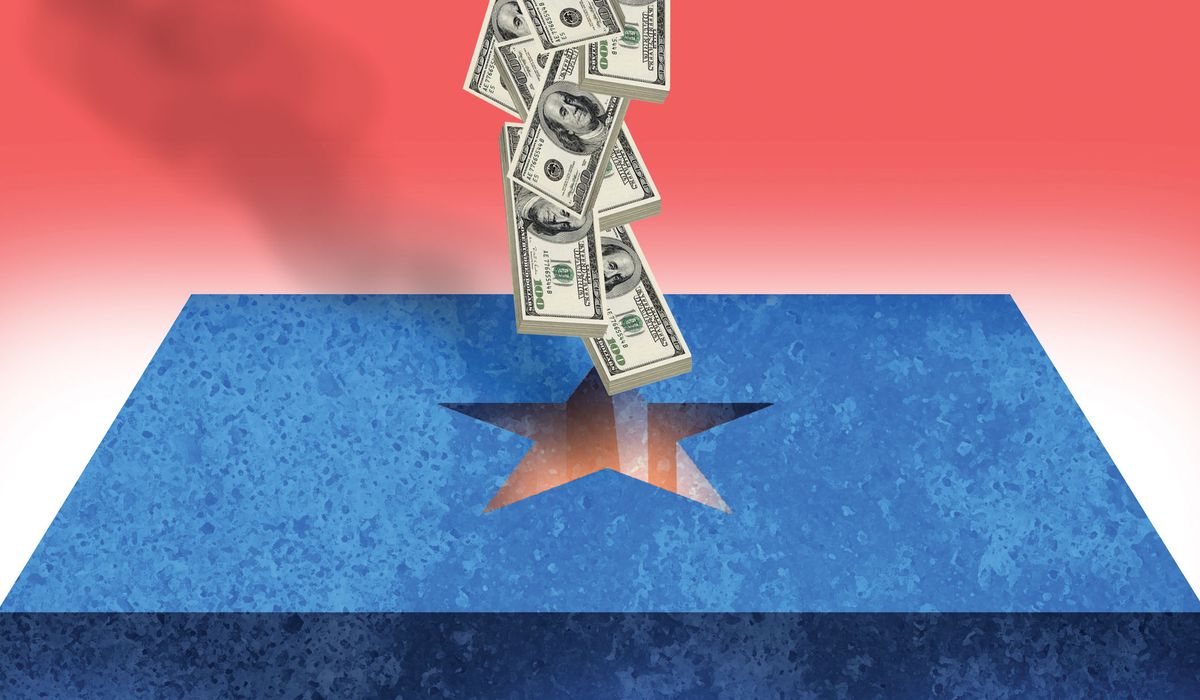
The allegations of widespread Somali-linked fraud in Minnesota have many Americans shaking their heads and wondering what else could be out there.
Read more WATCH: Feds move to close commercial driver’s license loophole after deadly Virginia bus crash
Unfortunately, if my experience is any indicator, it is not just taxpayers’ financial security that hangs in the balance; it is also our national security.
In 1994, I purchased and took over Merchants Bank of California, transforming a struggling community bank into one with global reach.
Among other services, Merchants Bank offered foreign remittance services, enabling international fund transfers.
Often used by underserved communities where traditional banks refuse to operate, foreign remittances allow migrant workers to send money to their home countries. The International Monetary Fund has called these services a “lifeline for development.”
Foreign remittances are not without risk, especially to countries such as Somalia with links to terrorist organizations such as al-Shabab and Islamic State operatives in Somalia.
Aware of the stakes, our bank maintained strict security, compliance and monitoring standards. Banks operate in one of the most heavily scrutinized industries. At our bank, large transfers were prohibited and most transfers were for family members.
Everything was monitored closely. It was the right thing to do, and the future of our business depended on it.
At one point, my bank was responsible for as much as 85% of all U.S. money transfers to Somalia. With Minnesota accounting for 40% of the entire U.S. Somali population, the state became an epicenter of our business.
In 2013, the Obama administration launched Operation Choke Point to “choke out” legitimate but politically disfavored businesses, including those involved in foreign remittances. The concern was that funds would end up in the wrong hands, including those of extremist and terrorist organizations in Somalia.
By 2015, amid increasing pressure from the Office of the Comptroller of the Currency, an independent bureau of the Treasury Department, Merchants Bank ended its Somali remittance accounts.
Somali transfers were only a small part of our broader portfolio, and no bank can operate with federal regulators breathing down their necks. We were following the rules, but it was still easier to cut bait and move on.
We thought this would end the matter. Minnesota politicians had a different idea.
Read more California comes under DOJ scrutiny for program boosting gay-owned contractors
Keith Ellison, then the U.S. representative for the largest Somali district in the country, warned us of the “devastating effects” on our bank of closing these accounts. Mr. Ellison applied intense public pressure to keep the accounts open and the funds flowing.
By September 2014, as a result of Mr. Ellison’s pressure, Merchants Bank resumed Somali remittance accounts. This decision unleashed furious federal regulatory backlash. Pursued relentlessly by the OCC and the Financial Crimes Enforcement Network and facing $8 million in fines, we had no choice but to close in 2017.
We were not accused of money laundering, terrorism financing or any other criminal activity. They simply claimed that our compliance program was inadequate.
Merchants Bank was in an impossible situation, caught between two powerful currents with conflicting demands. The Obama administration sought to end remittances to Somalia, while Mr. Ellison and his allies were determined to keep the funds flowing.
Shutting down the largest bank for Somali remittances operating in the legal marketplace gave rise to a thriving black market. Carefully monitored bank transfers with full identification of senders and recipients became bulk cash shipments to Somalia or anywhere else with little oversight.
Today, anyone can legally carry unlimited amounts of cash internationally simply by filling out a basic FinCEN Form 105. Minnesota Republicans have said that $350 million in cash left Minneapolis-St. Paul International Airport in 2025.
In the past decade, untold amounts of money have traveled on unmonitored cash flights, enabling fraud, trafficking and serious threats to America’s national security. Bad actors traffic money through unregulated channels, while prudent bankers who tried to create a regulated channel paid for it with their livelihoods.
The Trump administration has vowed to dismantle weaponized regulation and crack down on fraud. Every honest taxpayer should wish the president and his team success in that worthy endeavor.
According to a new report from the House Oversight and Government Reform Committee, up to $9 billion could have been squandered in Minnesota’s Medicaid scandal.
At the same time, without accountability or oversight, there is no telling how much money is flowing between our country and Somalia — or, even worse, where it is going.
More than a decade ago, my bank tried to protect against fraud risks, and we were run out of business. Hopefully, someone in Washington is paying attention before our country pays a far steeper price.
• Daniel K. Roberts is the former chairman, president and CEO of Merchants Bank of California.
Read more DOJ seeks to block reparations to Black people whose ancestors suffered housing discrimination
About the Author