Peace negotiations between the U.S. and Iran faced further challenges on Thursday as Tehran issued threats to commercial vessels traveling outside preapproved routes in the Strait of Hormuz and rejected calls to use unfrozen funds to purchase American farm goods.
Read more ABC to air Taylor Frankie Paul’s season of ‘The Bachelorette’ in mid-July: Sources
Iran’s Islamic Revolutionary Guard Corps warned ships that the only secure way to travel in the Strait of Hormuz was through its waters in coordination with its navy. It added that traveling through alternative routes could have deadly consequences.
“This route is unacceptable and extremely dangerous,” the IRGC said in a statement carried by the state-affiliated Tasnim news outlet. “We warn all vessels to strictly refrain from any movement outside the designated route.”
The statement was an apparent reference to the Omani waters the International Maritime Organization has used this week to guide ships stranded in the Persian Gulf since the start of the U.S.-Israeli-Iran war in late February.
Iran and Oman have held talks recently to discuss a potential framework agreement for managing the strait under which vessels moving through the waterway would pay a fee for navigational and security services provided by authorities.
Following the IRGC’s threat, the United Kingdom Maritime Trade Operations received a report in the afternoon that a cargo vessel traveling southeast of Dahit, Oman, had been struck by an unknown projectile. There were no reported casualties and authorities are investigating the incident.
The IRGC has not claimed responsibility for the attack. The Wall Street Journal, citing two unnamed U.S. officials, said Iran was behind the strike.
IMO Secretary-General Arsenio Dominguez said following the attack that his organization would temporarily pause its operations in the waters near Oman to “reconfirm that the necessary safety guarantees” with relevant authorities.
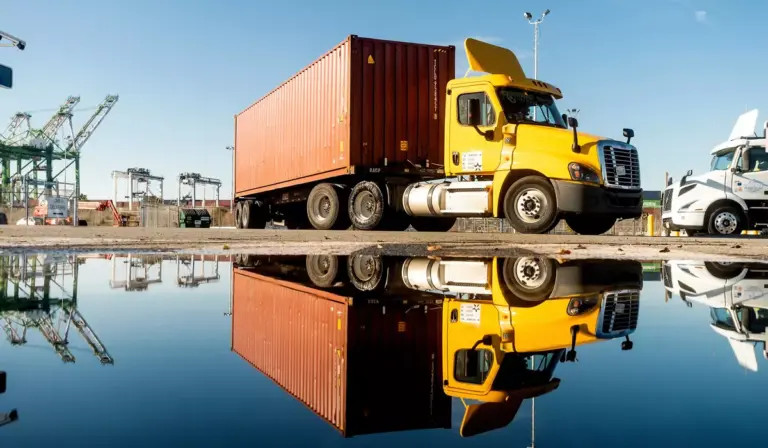
Iran closed the Strait of Hormuz in early March following strikes from Israel and the U.S. aimed at destroying Tehran’s military strength and its ability to build a nuclear weapon. At least 20% of the world’s oil travels through the strait each year, and its closure caused oil prices to skyrocket for weeks.
The U.S.-Iran memorandum of understanding, signed by both parties last week, says that Iran must move to immediately reopen the Strait of Hormuz and charge no fees for at least 60-days while both sides negotiate.
Well before the memorandum was signed, Iran said it would maintain control over the strait after the war and that ships transiting through would need to pay a fee for navigational and security services provided by authorities.
U.S. and European leaders have routinely rejected allowing Iran to control the strait, saying that charging fees would go against international law.
Secretary of State Marco Rubio, who also attended the joint meeting, reaffirmed Thursday that the Strait of Hormuz would be toll-free under any final agreement with Iran.
Read more Kelsey Grammer meets with Trump to discuss movie role
“You can call it a toll, you can call it a fee — whatever you want to call it, it’s a game of semantics. The reality of it is that no country on Earth has a right to charge for the use of international waterways, and that will never be an acceptable condition of any deal,” Mr. Rubio said.
Mr. Rubio finished a three-day visit to the Gulf countries in the Middle East on Thursday, aimed at shoring up support for the memorandum. Gulf leaders are particularly interested in ensuring that the final agreement between the U.S. and Iran provides some guarantees for regional security.
Mr. Rubio assured Gulf leaders that any comprehensive deal with Iran would include a settlement of Iran’s ballistic missile, drone and proxy initiatives, which he said have destabilized the region.
The memorandum of understanding does not address Iran’s missile and drone program, the destruction of which was a key war goal of the Trump administration, or Tehran’s support for proxy groups such as the Houthis, Hamas or Hezbollah.
President Trump also said last week that he would potentially support Iran keeping its ballistic missiles because other countries in the region have them as well.
Additionally, the U.S. and Iran continued to publicly disagree over the use of frozen assets.
Iranian Parliament Speaker Mohammad Bagher Ghalibaf, a key negotiator in peace talks, on Thursday rebutted U.S. claims that Tehran would use its unfrozen assets to buy American farm products, which officials floated earlier this week.
“America falsely claims our unfrozen assets will buy their agriculture. Interesting,” he wrote on X. “The only crop we’re harvesting is what you planted: decades of mistrust. It’s organic, abundant, and homegrown. But apparently, the U.S. only exports GMO soybeans, broken promises and trash talks [sic].”
The memorandum says the U.S. and Iran must “mutually agree on the procedures related to the release of these funds” before Iran can gain access to the nearly $24 billion of frozen assets.
Trump administration officials have repeatedly said that the release of the funds would be conditional and that they could only be used in ways approved by the U.S.
“As the MoU states, the United States must approve how the funds are used. As Vice President [J.D.] Vance announced this week, if Iranian assets are released, they will be used to purchase American agricultural products to feed the Iranian people,” a U.S. official told The Washington Times on Thursday.
Read more Historic Philadelphia mansion for sale, but buyer must allow battle reenactments on lawn
About the Author