A Black activist group is urging the California public school system to accommodate “Black English” in schools, arguing that Black children’s use of the dialect must be “honored.”
Read more Combat evolved: How data is taking over warfighting for the U.S. military
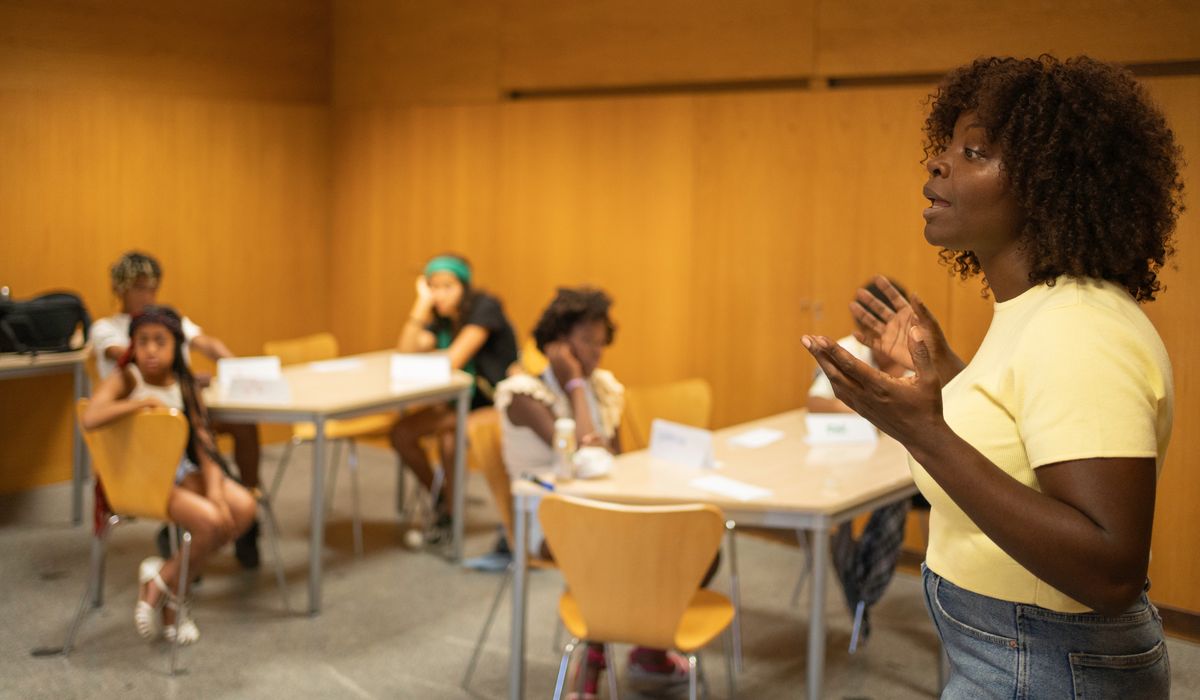
Leading the “Black English” charge is Ashley Williams, co-founder of the nonprofit group Black Californians United for Early Care and Education (BlackECE).
“I don’t want my son to walk into any room and feel like his voice is not valued or his perspective can’t be heard because he’s not saying it in one way or the other,” Ms. Williams said in a recent interview with PBS.
She has a 2-year-old son.
Mrs. Williams, a lecturer in the Doctorate in Educational Leadership for Social Justice and Equity program at San Francisco State University, said the idea that Black English is inferior causes “a lot of shame and embarrassment” for Black children. “You’re being constantly corrected when you’re still in a moment when you’re just learning language,” she said.
BlackECE’s website lists phrases it says are typical of “Black language,” such as “she be working” and “they happy.”
Through an online webinar series, the group advocates “affirming” and “honoring” children’s use of this dialect, particularly before the age of 8, because it “lays the foundation for joyful learning.”
Mrs. Williams said that relatives warned her as a child that the dialect she used “amongst our community wasn’t OK at the schoolhouse.”
Mrs. Williams’ proposals drew criticism from conservatives.
“Dumbing down curricula to hurt minorities is a typical play of malicious and stupid liberals,” Fox News host Laura Ingraham said on social media.
Read more U.S.-Iran ceasefire collapses amid new strikes as Trump mulls restarting war
BlackECE did not respond to a request for comment.
The organization is calling on the California school system to establish programs that treat students who speak in Black English similarly to how it treats multilingual students.
The California Department of Education offers a “Dual Language Immersion Program,” which combines instruction in multiple languages with the goal of English proficiency.
“We know that with being deemed multilingual learners, there are resources, there’s support, there’s teacher training,” Mrs. Williams said. “And we’re saying, ’Yes, and we belong in that conversation too.’”
California’s bilingual education programs accommodate a large population of non-native English speakers.
In 2022, the state education department found that over 1.1 million English learners constitute 19.01% of students enrolled in California public schools.
Over 2.3 million students in total — just shy of 40% — spoke a language other than English at home. Almost 82% of English learners in the state’s public schools spoke Spanish.
“We talk about multilinguals, but we don’t include Black children who may be African-American English speakers,” Xigrito Soto-Boykin, a professor who works with Arizona State University’s Children’s Equity Project, told PBS.
Read more Ex-judge who obstructed ICE arrest is fined but avoids jail time
About the Author