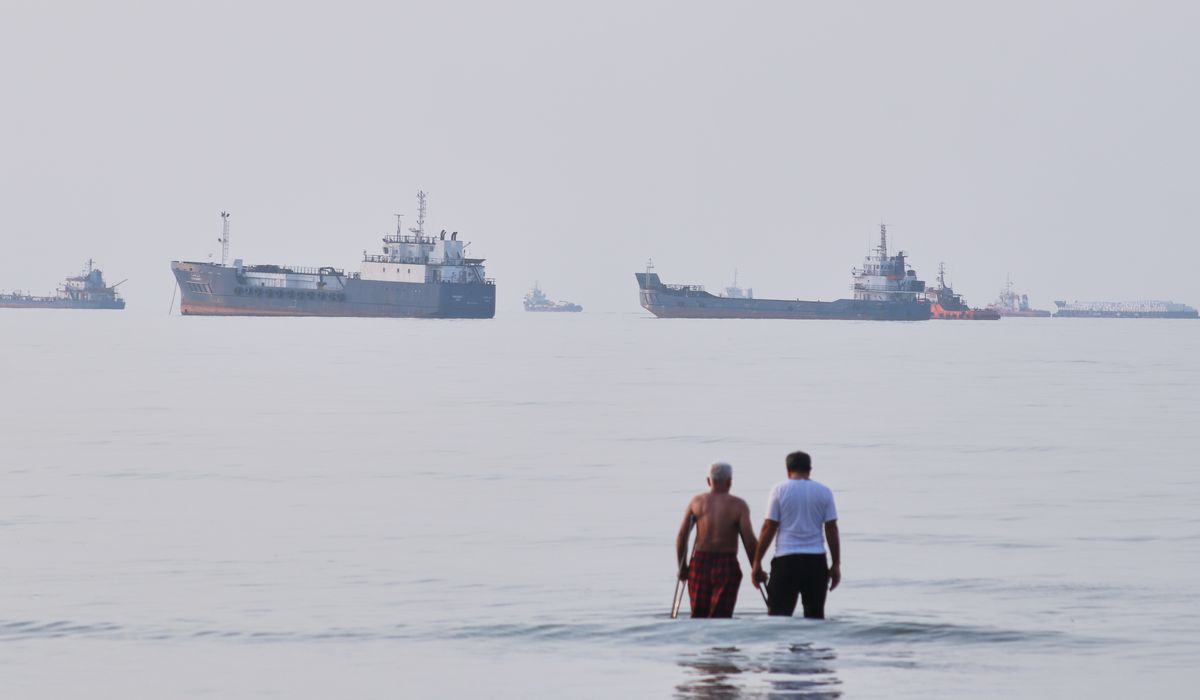
President Trump reversed plans to slap hefty fees on commercial ships in the Strait of Hormuz, but the Iran conflict only intensified Tuesday as the U.S. reimposed a naval blockade and Tehran launched new attacks on Gulf countries.
Read more Foreign ships, American fury: Trump’s gamble on foreign oil tankers nears a deadline
In a social media post, Mr. Trump wrote that the strait is open to all commercial shipping except for Iran, citing what he called the regime’s “lying, violent, malicious leadership.”
He added that U.S. Central Command, which oversees American military operations in the Middle East, would reinstate a naval blockade of Iran’s ports at 4 p.m. Tuesday. The U.S. had operated a blockade on Iran for weeks before June’s signing of the Islamabad Memorandum of Understanding, which required Washington to halt it.
The U.S. initially imposed the blockade in response to Iran’s own closure of the Strait of Hormuz, which devastated international energy markets and drove up prices worldwide.
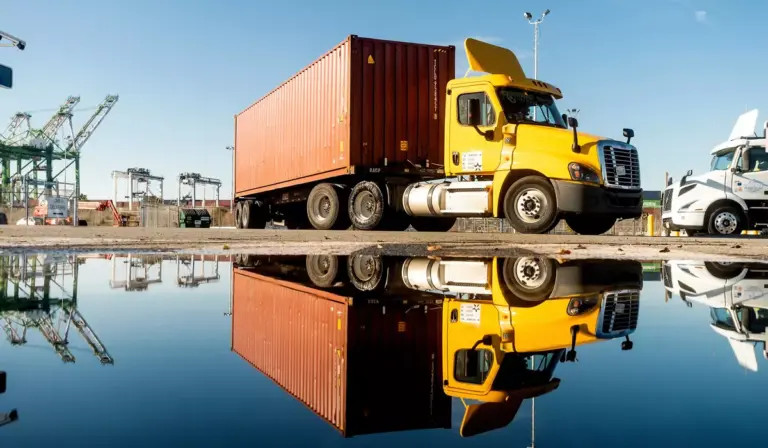
The blockade turned away any ships trying to enter or leave Iranian ports, likely cutting into Iran’s multimillion-dollar oil revenue. But it also left commercial ships unable to transit the strait — which connects the Persian Gulf to the Gulf of Oman — without risking attack by Iranian drones, small boats or missiles.
Earlier this week, Mr. Trump floated a plan to impose fees of at least 20% of a vessel’s cargo value on any commercial ship transiting the strait, framing it as compensation for U.S. protection in the waterway.
He backed off that plan Tuesday. Instead, he wants the U.S. reimbursed for its security efforts through investment deals from Gulf nations that stand to benefit from a reopened strait.
“Based on highly productive conversations with Middle East leadership, I have decided to replace the 20% United States Reimbursement Fee with Trade and Investment Deals that the various Gulf States will be making into the United States,” Mr. Trump wrote on Truth Social. “Those Investments will be MASSIVE but, at the same time, extraordinarily good for them, and their future.”
Mr. Trump’s original fee plan would have directly contradicted stated U.S. policy. Secretary of State Marco Rubio and Vice President J.D. Vance have both insisted no country can charge fees for passage through international waters.
Read more What the removal of the state sponsor of terror designation means for al-Sharaa’s Syria
The reversal comes after the U.S. launched a third straight night of strikes on Iran. CENTCOM said the bombing was intended to degrade Iran’s ability to attack civilian vessels and disrupt commercial shipping in the strait.
Iranian state media reported several explosions in the country’s southern provinces Tuesday, notably near Bushehr, home to Iran’s only civilian nuclear power plant.
Iran launched retaliatory strikes Tuesday against U.S. assets in the region and targeted at least two ships trying to transit the strait via Omani waters. Kuwait’s military said its forces were actively intercepting “hostile attacks” from Iran Tuesday afternoon, and Iran’s military said it struck U.S. facilities in Bahrain and Jordan.
Iranian officials continued to insist Tuesday that the U.S. must respect Iran’s sovereignty over the strait if it wants shipping to return to prewar levels. Iranian army spokesman Brig. Gen. Mohammad Akraminia, quoted by state-affiliated media, said Iran’s conditions for reopening the strait were strict adherence to the Islamabad MOU and recognition that Iran will retain control of the waterway. He added that Washington’s attempt to route shipping through Omani waters amounted to an “alternative route” that violated the memorandum’s terms.
Gen. Akraminia warned that the strait — through which 20% of the world’s oil travels each year — would not reopen under “U.S. aggression or pressure.”
Iran kept the strait effectively closed for nearly four months, using sea mines and small boats, before signing the memorandum that set up the ceasefire and reopened the waterway to commercial shipping. Over the past week, Iran ramped up attacks on commercial vessels, insisting they travel only through Iranian-controlled waters and cooperate with its military — attacks that led to the collapse of the ceasefire and the MOU itself.
The memorandum does not grant Iran sovereignty over the strait, but it requires Iran to use its best efforts to ensure safe, fee-free passage of commercial vessels for 60 days between the Persian Gulf and the Sea of Oman. It also requires Iran to negotiate with Oman to “define the future administration and maritime services in the strait.”
Read more Trump layoffs responsible for most D.C. job losses since 2020, report finds
About the Author