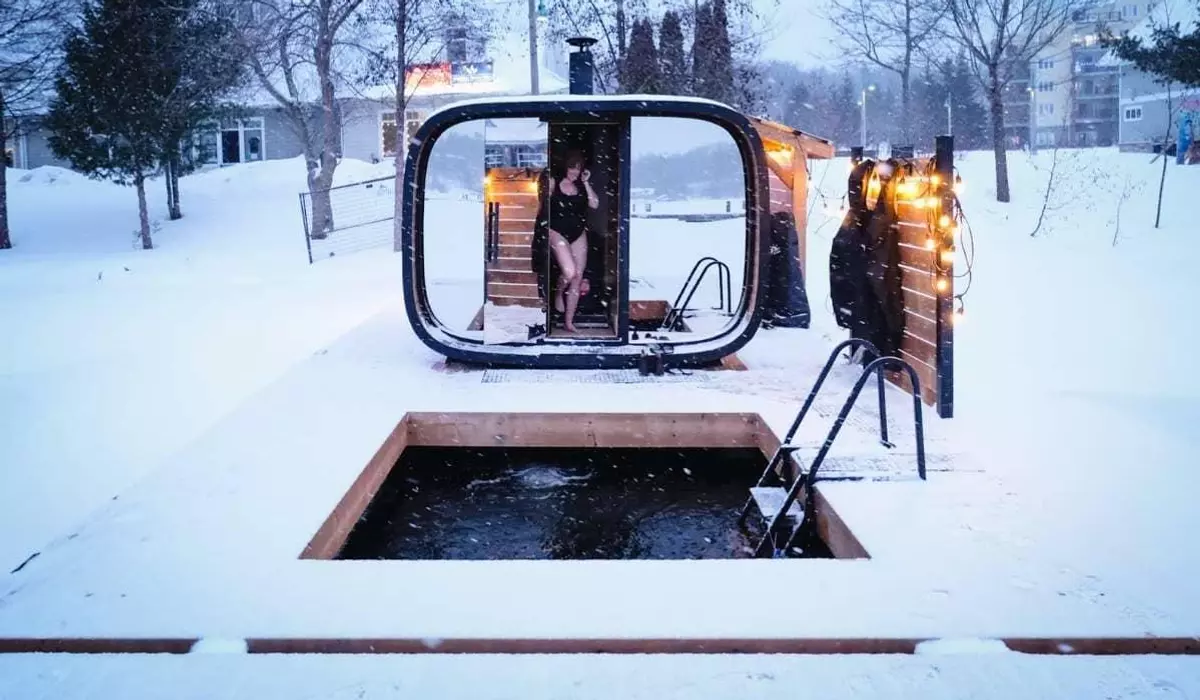
A hot sauna, a cold plunge and forest immersion are the prescriptions Nordic dwellers have sworn by for generations, and millions of others have adopted these traditional practices as well.
Read more Air Force launches test flight of Minuteman III intercontinental ballistic missile
Part of what makes these activities so appealing is that they can be done individually or in a community setting.
“If you go to Finland, sauna is very much a social experience, always has been, always will be. So as much as people may have [a] sauna by themselves from time to time or in small groups, they will actually go out and seek social time in the sauna environment,” said Alan Jalasjaa, a cultural steward for sauna from Finland.
“That’s very common in Finland, not so much in North America, but that’s been changing in recent years,” he said.
Consumer appetite for sauna-related services is surging, according to luxury sauna retailer Topture. In 2024, the U.S. sauna industry was valued at $197.6 million. It is projected to reach $311.4 million by 2033.
The global sauna equipment market is on track to reach $1.56 billion by 2033, Topture reports.
Yet it’s the pursuit of happiness — and long life — that has the rest of the world striving to emulate the lifestyle of the Nordic countries. Denmark, Norway, Sweden and Finland have topped the World Happiness Report for more than a decade and have life expectancies from 81 to 83 years, well above the global average.
The secret, the Danes say, is “hygge” (pronounced HOO-gah), a cultural philosophy that focuses on simple pleasures, emotional well-being and slowing down amid the hustle and bustle of daily life.
“Hygge is often translated as coziness, but that is only the surface. At its heart, hygge is about creating a sense of psychological safety — spaces where we can lower our guard,” said Meik Wiking, an author and chief executive of the Happiness Research Institute in Denmark. “In those moments, we are not performing, not striving, simply being. This allows the nervous system to rest.
“It is in these small pockets of calm that we reconnect — with ourselves and with others — and that is where much of its deeper value lies,” Mr. Wiking said.
Warm and cozy
The Danes’ hygge finds a natural expression in the Finns’ sauna culture, where warmth and shared experience foster connection and comfort.
Mr. Jalasjaa described the sauna cycle: the heat of the sauna, followed by a cold bath or shower, then rest.
“And that’s when you get the endorphin rush. That is when you get that euphoric feeling. It could be a level of mental clarity. It could be a level of peace. Whatever those things that you feel, you feel that in the rest,” he said.
The sauna cycle has been shown to improve sleep and mental clarity and to provide physical benefits that Finns have claimed for centuries.
Earric Lee backs up this evidence in his work as a postdoctoral research fellow at the EPIC Center of the Montreal Heart Institute. He studies the effects of sauna use on physiological health.
Mr. Lee said saunas release beta-endorphins and adrenocorticotropic hormone (ACTH), which contribute to an overall sense of happiness and relaxation.
Additionally, repeated heat exposure can make arteries more elastic over time, facilitating smoother blood flow, he said.
“These mechanisms are more effective for younger people. A lot of the research has been done on fairly young people. It hasn’t been done in people who are older than 65,” he said.
Cool off before you relax
The cold plunge is considered an essential and natural extension of the thermal routine. Although the classic Finnish tradition involves rolling in snow or jumping into a cold lake, most people now order small tubs for cold plunges, intending to immerse themselves in cold water for minutes at a time.
The market for cold plunges is expected to nearly double, reaching about $2 billion by 2035, according to a Future Market Insights report.
Read more Iran’s Islamic Revolutionary Guard Corps threatens to expand war beyond region if attacked again
Data Bridge Market Research finds North America with the largest revenue share.
Research on cold-water immersion and its benefits shows reduced exercise-induced muscle damage, leading to less inflammation and reduced soreness, thereby restoring physical performance.
A University of Oregon study published in the Journal of Thermal Biology found that a 15-minute cold-water immersion significantly reduced heart rate variability, blood pressure and cortisol, a key stress biomarker.
Participants reported improved mood several hours after cold exposure, further suggesting that cold exposure enhances parasympathetic nervous system activity, or the body’s “rest and recovery” response.
Cold immersion also stimulates white blood cells, called leukocytes, that fight illness. This causes the lymphatic system to contract, pushing fluid through the lymph nodes to aid detoxification and strengthen immune function.
Athletes and fitness/health enthusiasts have taken a particular liking to cold plunges.
After hard training sessions, cold therapy can help reduce pain and soreness caused by the natural inflammation and swelling that accompany intense exercise.
Many use it to build mental toughness and expand their window of tolerance.
Former world-record marathoner Paula Radcliffe was known for using ice baths for recovery. Ms. Radcliffe credited the routine as the “secret to her success.”
However, Harvard Health does not recommend cold plunging for those with cardiovascular disease or heart rhythm abnormalities. In the article “Cold Plunges: Healthy or Harmful for Your Heart?” cold plunges are reported to potentially lead to a breakdown in muscle power and strength.
Despite this, modern science has begun to validate that hot-cold cycling can offer remarkable benefits to the body and mind.
A perk once reserved for elite athletes and Finnish sauna enthusiasts has quickly become a home wellness amenity.
More than a walk in the park
You sweated in the sauna. You chilled in the cold plunge. What’s next?
Some call it forest “bathing” or nature immersion. The Norwegians call it “friluftsliv” (pronounced FREE-loofts-leev), which translates to “open air life.”
It involves more than walking around outside.
Friluftsliv is rooted in the belief that spending time outdoors in nature is essential to physical, mental and spiritual well-being. Practitioners are encouraged to engage and indulge their senses: breathe deeply and smell flowers and plants; listen for birdsong, animal sounds and rustling leaves; feel the ground beneath their feet, the roughness of tree bark, the wisp of a petal; note colors, shadows and movement while walking at an unhurried pace.
Norwegians promote friluftsliv in their day-to-day lives through legislation, education and community.
Nordic spa culture embraces the practice by placing saunas outdoors, immersing people in natural surroundings — fresh air, trees and water — to nourish the soul.
Across the U.S., many local parks and nature and wildlife sanctuaries offer guided forest bathing sessions open to families, groups and corporate retreats, bringing the spirit of friluftsliv to communities nationwide.
“It’s not always possible, but at least being outside and being able to breathe the fresh air, see the trees, be at one with nature, hear the birds, all these little elements is very beneficial for the soul to connect with nature. That’s what everything is based on,” Mr. Jalasjaa said.
Mr. Jalasjaa described nature as a core element of the sauna experience because it grounds us and pulls us away from the distractions of modern life.
“Nature is a big element because it grounds you. So anytime you have a chance to be exposed to nature that’s going to ground you, essentially taking you away from the distractions of digital devices and such,” he said.
Read more Texas congressional Democratic candidate calls for ‘American Zionists’ to be sent to internment camp
About the Author