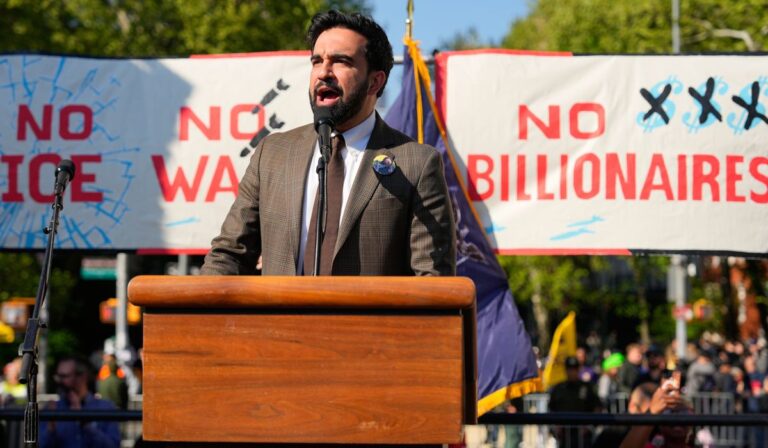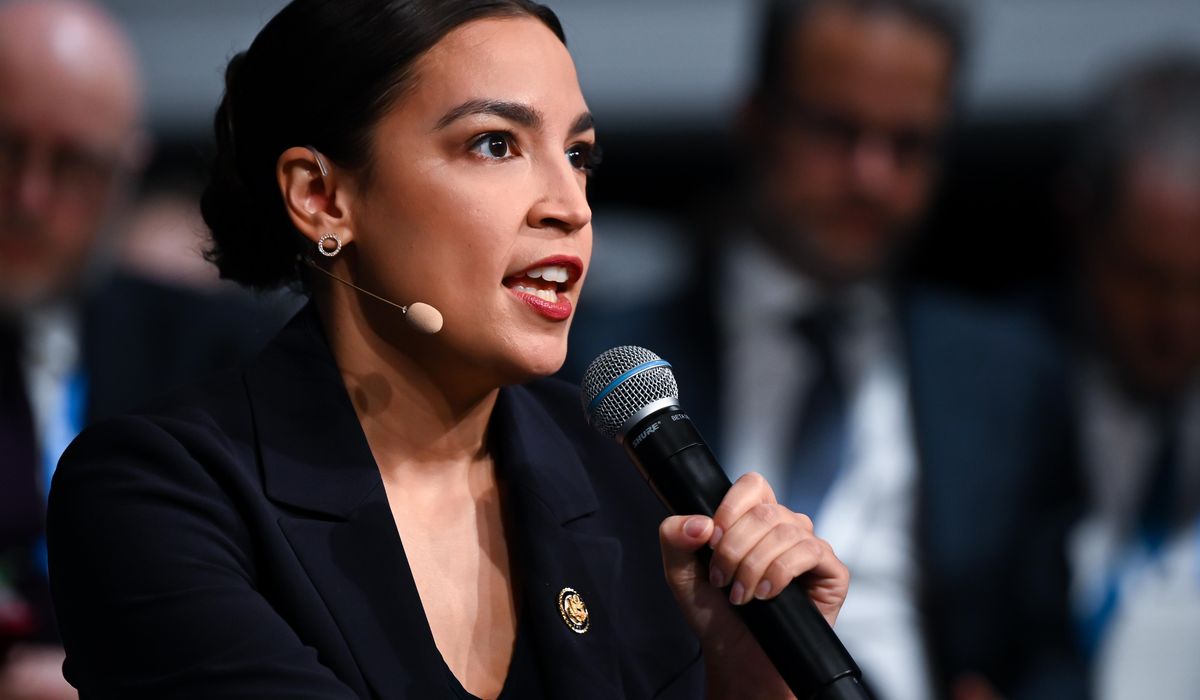
Rep. Alexandria Ocasio-Cortez is flexing her political muscle for Abdul El-Sayed’s bid for the U.S. Senate in Michigan — her first move into a contested Democratic primary this cycle and a clear signal that the party’s left flank is rallying around its preferred candidate ahead of next month’s vote.
Read more Public backlash explodes against mass surveillance cameras
Ms. Ocasio-Cortez, who backed Mr. El-Sayed’s insurgent 2018 run for governor, said she rejects the idea that his candidacy would jeopardize Democrats’ chances of holding the seat of retiring Democratic Sen. Gary Peters in November.
“Despite our ideological differences and whatever disagreements there are in the party, every single one of us sees this moment as existential,” the New York Democrat said. “And I think many people are willing to put aside differences in order to give us the best chance at winning. And I think that Abdul gives us that right now.”
Her endorsement puts her at odds with Senate Minority Leader Charles E. Schumer, another New York Democrat, who is supporting Rep. Haley Stevens in a race that also includes state Sen. Mallory McMorrow.
Ms. Ocasio-Cortez, 36, is also weighing her own political future — whether to run in 2028 for president or challenge Mr. Schumer, 75, for his Senate seat — adding another layer of intrigue to her decision to wade into the Michigan contest.
Her endorsement for the Aug. 4 primary could give Mr. El-Sayed an extra jolt of momentum. He leads recent polls, and his supporters are already energized by a string of far-left victories in Democratic primaries, including wins by democratic socialists this week in Colorado and last week in New York City.
Still, it’s unclear whether that brand of politics has broad enough appeal to carry a statewide race in Michigan, a battleground where ideological edges tend to get sanded down in November.
Read more Trump Accounts, giving newborns $1K, to launch July 4
One of the biggest dividing lines in the primary is the debate over America’s relationship with Israel — a topic that, for decades, both parties treated as politically untouchable.
That consensus has fractured. Voices on the left and the right now argue that Israel is responsible for a “genocide” against Palestinians in Gaza following the Oct. 7, 2023, Hamas massacre of Israelis.
Mr. El-Sayed and Ms. Ocasio-Cortez have been among the most outspoken critics. They have raised alarms about the influence of the American Israel Public Affairs Committee on Capitol Hill, accused Israel of trampling Palestinian human rights, and insisted the U.S. should halt all military assistance to the country.
Ms. Stevens, meanwhile, has accepted AIPAC money and remains a supporter of Israel — a stance that has opened her to criticism from the party’s far left.
Ms. Ocasio-Cortez said Mr. El-Sayed connects with voters.
“Just like it’s extremely challenging to run candidates that can’t raise money, it’s also just as challenging to run a candidate that can’t message online,” she told The New York Times. “I think we’ve now kind of crossed this Rubicon where online and digital messaging is no longer a niche. It is a core competency, just like any other.”
About the Author