OPINION:
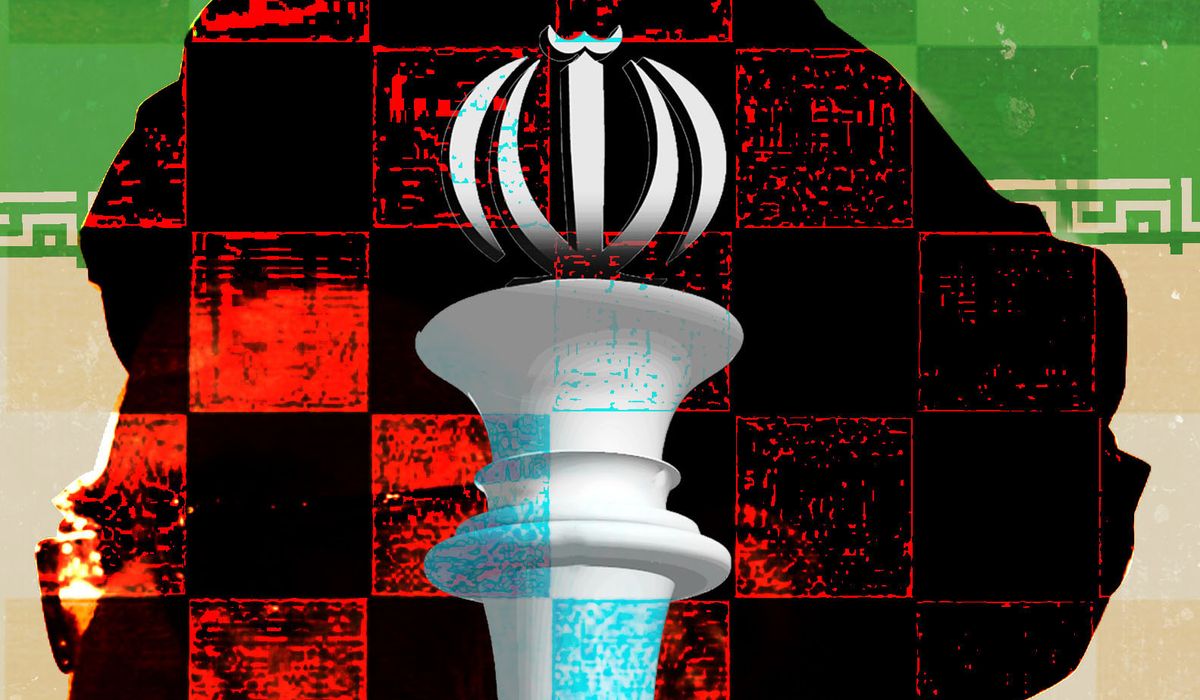
President Trump has observed that Iran’s rulers have “never won a war, but never lost a negotiation.” The question that should follow is: Why is that?
Read more Cracking down: DOJ sues egg giants for allegedly rigging prices
One reason they don’t win wars: They have neither nuclear weapons nor an adequate conventional force, despite what had been a fast-growing arsenal of missiles and drones.
The 2025 12-day war — which culminated in Midnight Hammer, President Trump’s deployment of B-2 stealth bombers to destroy subterranean nuclear facilities — was followed this year by Operation Epic Fury, a 38-day air campaign.
These two brief armed conflicts significantly set back Tehran’s nuclear and conventional weapons programs. Credit where credit is due.
One reason Iran’s rulers consistently win negotiations: They are adept at weaponizing hostage-taking.
These skills trace back to the fall of 1979, just months after the founding of the Islamic Republic of Iran, when followers of Ayatollah Ruhollah Khomeini seized the U.S. Embassy in Tehran and held more than four dozen Americans hostage in egregious violation of the most fundamental international laws.
Khomeini, by then Iran’s “supreme leader,” marveled — or maybe sneered — that “America can’t do a damn thing against us.”
His analysis was confirmed in April 1980 when Operation Eagle Claw, President Carter’s attempted hostage rescue operation, failed catastrophically.
Another reason Iran’s rulers have fared so well in negotiations: Most American presidents and their advisers have chosen to see the regime not as it is but as they would like it to be.
On Jan. 5, 1979 — almost a month before Khomeini returned from exile and three months before the declaration of an Islamic republic — Michael Ledeen, a renowned scholar of fascism, published an op-ed in The Wall Street Journal arguing that the ayatollah was a “clerical fascist.”
This was based on Khomeini’s published works and recorded lectures.
“If you look at fascism as it started in Italy, it’s a war ideology, just as radical Islam is,” Ledeen later explained. “Whereas the nation was the prime category of European fascism, in the Iranian case, ultimate fealty was pledged to Islam.”
The foreign policy establishment rejected this analysis. Perhaps that was because, in World War II, President Franklin D. Roosevelt and British Prime Minister Winston Churchill had established, at great cost, that appeasing fascists — as Churchill’s predecessor, Neville Chamberlain, had attempted — was a profoundly stupid strategy.
So to accept Ledeen’s label was to foreclose the policy the bien pensants were determined to pursue.
On Feb. 8, 1979, The New York Times reported that Andrew Young, Carter’s ambassador to the United Nations, had concluded that Khomeini was “a saint.”
On Feb. 16 that year, Richard Falk, a left-wing professor at Princeton specializing in “global governance,” wrote an article in The Times titled “Trusting Khomeini.” The depiction of the ayatollah as “fanatical, reactionary, and the bearer of crude prejudices seems certainly and happily false,” he confidently declared.
Over the years that followed, the facts on the ground should have made it undeniable: When Iran’s rulers vowed “Death to America” and “Death to Israel,” they meant exactly what they said.
Read more Virginia to let stores sell marijuana for recreational use starting in July 2027
For example, in 1983, Hezbollah, Iran’s terrorist proxy in Lebanon, bombed the Beirut barracks housing French and American peacekeepers, killing 241 U.S. service members, 58 French paratroopers and six Lebanese civilians.
In 1996, Tehran-backed terrorists struck Khobar Towers in Saudi Arabia, killing 19 U.S. Air Force personnel.
During the U.S. intervention in Iraq beginning in 2003, Shiite militias loyal to Tehran killed hundreds of American troops.
Washington’s response to such actions, under Republican and Democratic presidents alike, was feckless. In 2009, President Obama told Iran’s rulers: “We will extend a hand if you are willing to unclench your fist.”
Yet improving relations with the “Great Satan” was not on Iran’s to-do list.
Mr. Trump, in his first term, took a different approach. He withdrew from Mr. Obama’s Joint Comprehensive Plan of Action, the product of negotiations in which Tehran’s envoys easily bested Washington’s.
Under the JCPOA’s “sunset clauses,” many of the deal’s restrictions would by now have expired, leaving Tehran with an internationally sanctioned pathway to an industrial-scale nuclear program.
Mr. Trump also ordered the assassination of Qassem Soleimani, the most skillful of Iran’s terrorist masters, and he put serious economic pressure on the regime.
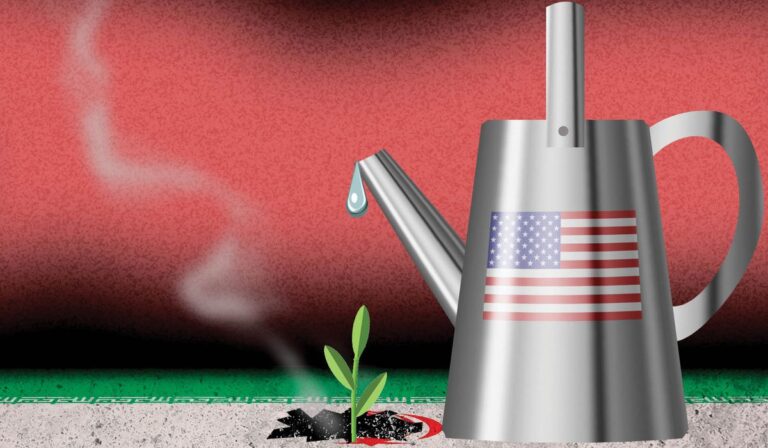
Starting in late February this year, Tehran played its one high card: using mines, missiles and drones to halt the transit of commercial vessels through the Strait of Hormuz, an international waterway and energy choke point.
On June 17, Mr. Trump signed a memorandum of understanding giving the regime a ceasefire and financial benefits in exchange for its promise to stop holding the strait hostage.
Yet on Thursday and Saturday, Iranian drones again began striking commercial vessels crossing the strait. The U.S. responded by striking Iranian military infrastructure. Tehran retaliated by targeting U.S. bases in Bahrain and Kuwait.
On Saturday, Mr. Trump warned on Truth Social: “There may come a point when we are no longer able to be reasonable, and will be forced to militarily complete the job that we very successfully started. If that happens, the Islamic Republic of Iran will no longer exist.”
Soon afterward, both sides agreed to hold their fire and head to Qatar for new talks, but a spokesman for Tehran said Tuesday that Iranian diplomats would not meet with American envoys — only with mediators.
Iranian Foreign Minister Abbas Araghchi doubled down on his claim that the Strait of Hormuz is Tehran’s private real estate, where rent will be collected and unwanted tenants evicted.
Iran’s rulers, who have never lost a negotiation, are betting that the current occupant of the White House is as beatable as his predecessors.
Mr. Trump knows what is required to prove them wrong. He has already told us.
• Clifford D. May is founder and president of the Foundation for Defense of Democracies, a columnist for The Washington Times and host of the “Foreign Podicy” podcast.
Read more Trio of MS-13 gang members convicted in monthslong murder spree that killed 9
About the Author